Small Bedroom Safety For Seniors
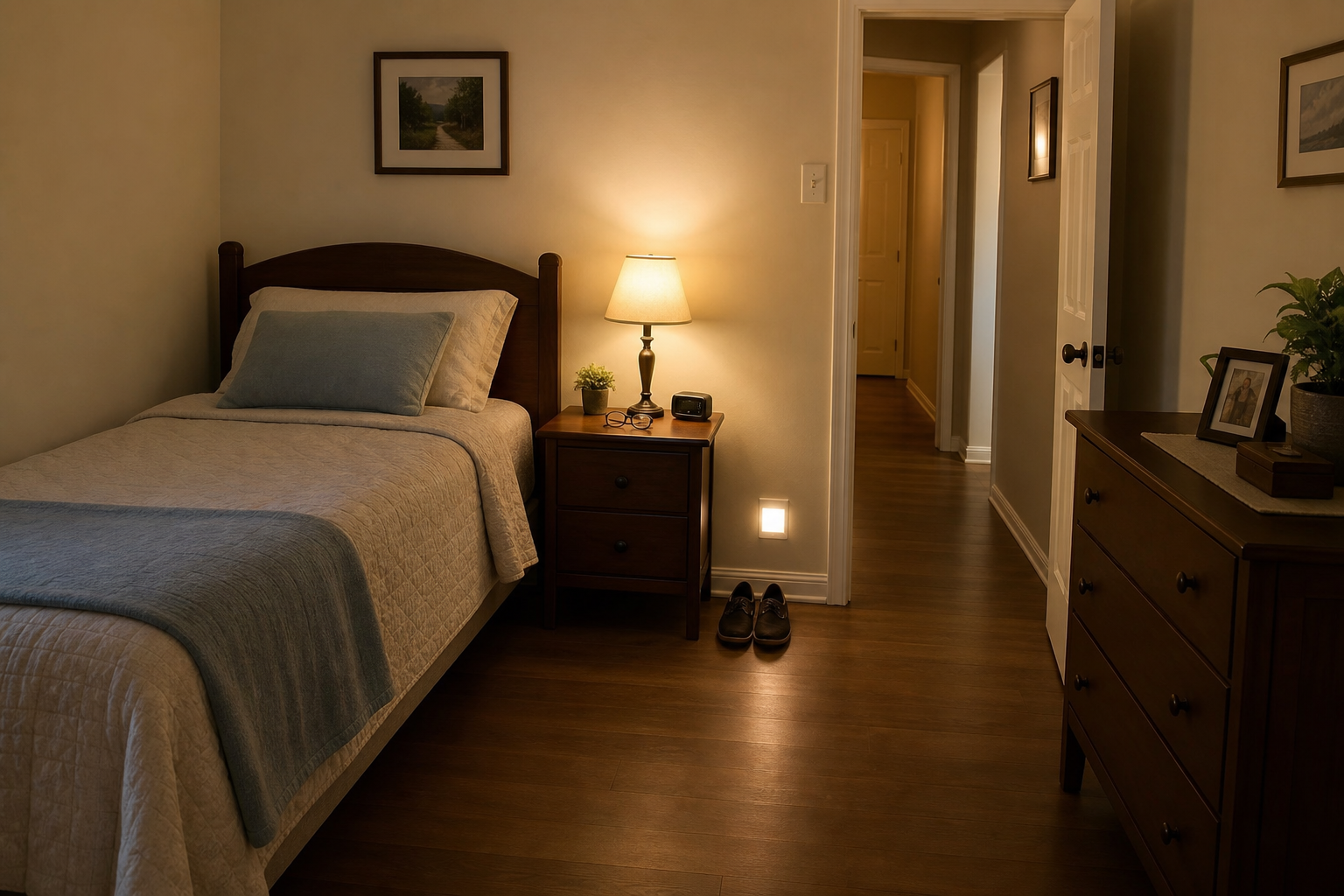
Small Bedroom Safety For Seniors starts with one simple problem: there is less room to move safely. A small bedroom can work well, but only when the bed, furniture, lighting, storage, and walking paths are arranged with daily movement in mind.
The goal is not to create a perfect room. The goal is to make ordinary routines safer without expensive remodeling. A few practical changes can make dressing, getting out of bed, using a walker, reaching storage, and walking at night much easier.
Small Bedroom Safety For Seniors Starts With Clear Walking Space
Small Bedroom Safety For Seniors depends first on having enough open floor space to move without twisting, stepping sideways, or bumping into furniture.
A small room becomes risky when the walking path is treated as leftover space. Seniors often need more turning room than they used to, especially when using a cane, walker, slippers, or a laundry basket. Even a narrow gap between the bed and dresser can become a problem if the person has to shuffle, pivot sharply, or reach for furniture to stay balanced.
Start by watching the normal route from the doorway to the bed, closet, dresser, and bathroom. The safest layout usually has fewer pieces of furniture, not better furniture.
Useful actions include:
- Remove small tables that sit directly beside walking paths.
- Move laundry baskets out of the main route.
- Leave enough space beside the bed for both feet to land flat.
- Shift dressers so drawers do not open into the walking lane.
- Keep shoes against a wall instead of beside the bed.
- Remove decorative floor items from corners and doorways.
Small Bedroom Safety For Seniors is often improved most by subtraction. Taking one extra chair, basket, or table out of the room may do more than buying another product.
Arrange The Bed For Safer Daily Movement
The bed should support easy sitting, standing, and nighttime movement.
In a small bedroom, the bed is usually the largest object, so its position controls almost everything else. A bed pushed too close to a wall may save space, but it can also force awkward movement. A senior may need to slide, twist, or scoot sideways before standing. That becomes more difficult when balance, strength, or joint comfort changes.
The best bed position usually provides a simple route to the door, dresser, and bathroom. If only one side of the bed is used, make that side as open and predictable as possible.
Practical changes include:
- Place the preferred exit side of the bed near the clearest walking path.
- Keep a stable nightstand within easy reach, but not in the foot path.
- Avoid placing the bed where the person must walk around sharp corners.
- Make sure blankets do not hang low enough to catch a foot.
- Keep frequently used items on the same side the person exits.
- Use a firm chair elsewhere if dressing on the bed causes sliding.
Bed height matters, too. A bed that is too low makes standing harder. A bed that is too high may cause the feet to dangle before standing.
Reduce Furniture Crowding Without Making The Room Feel Bare
Furniture should earn its place in a small bedroom.
Many bedrooms collect extra pieces over time: a chair, a second nightstand, a small bookcase, storage cubes, plant stands, baskets, and sentimental tables. The problem is not that these items are unattractive. The problem is that each one narrows a path, creates a corner, or becomes something to bump into during a tired moment.
A safer room can still feel personal. The key is to keep meaningful items where they do not interfere with movement.
Good furniture decisions include:
- Keep one stable nightstand instead of two crowded surfaces.
- Remove low stools that are easy to miss visually.
- Replace wobbly side tables with one solid surface.
- Move keepsakes to shelves rather than small floor stands.
- Choose drawers that open without blocking the main path.
- Keep chair legs completely outside the walking route.
A chair can be useful if it helps with dressing, but it should be stable and firm, and positioned so that standing up does not require turning toward a wall or dresser. Small Bedroom Safety For Seniors improves when every piece of furniture has a functional purpose, not just a storage one.
Make Storage Easy To Reach Without Floor Clutter
Storage should reduce hazards, not create new ones.
Small bedrooms often become overflow storage areas. Extra bedding, shoes, bags, paperwork, seasonal clothing, medical supplies, and gifts can all end up on the floor because there is nowhere else convenient to put them. This is when a small room becomes harder to use safely.
The safest storage is reachable without bending deeply, climbing, or walking around piles. Everyday items should sit between shoulder and knee height when possible. Rarely used items can go higher or lower, but they should not require risky stretching.
Useful storage adjustments include:
- Put daily clothing in the drawers that are easiest to open.
- Store shoes on a low rack against the wall, not loose on the floor.
- Move extra blankets to a closet shelf or under-bed container.
- Keep medication, glasses, and phone chargers on one stable surface.
- Remove bags from doorknobs if they swing into the walking path.
- Use shallow bins so items can be seen without digging.
Do not solve clutter by adding more small furniture. In many small rooms, another storage cart simply narrows the safest walking route. A simple closet cleanout may be safer than a new organizer.
Improve Nighttime Movement Before Buying Devices
Nighttime safety depends on predictable routes and visible edges.
Small bedrooms are often most hazardous at night because movement is slower, lighting is dimmer, and judgment is not as sharp after waking. A person may reach for the bathroom, a glass of water, medication, or a phone without fully noticing what has shifted in the room.
The path from bed to door should stay the same every night. Small changes that seem harmless during the day can create a serious trip risk in the dark.
Practical nighttime steps include:
- Place a motion night light near the bed exit side.
- Keep slippers in the same location every night.
- Remove loose cords from the path between the bed and the door.
- Keep the phone within reach without stretching across the bed.
- Use a lamp switch that is within reach before standing.
- Avoid dark rugs that blend into the floor.
Small Bedroom Safety For Seniors should account for tired movement, not just alert daytime movement. The safest room is easy to understand before the person is fully awake.
Keep Floors Simple, Flat, And Easy To See
The floor should be boring in the best possible way.
In a small bedroom, the floor has to do a lot of work. It supports walking, turning, dressing, reaching, and sometimes walker movement. That means loose rugs, curled mat edges, power cords, stacked shoes, and slippery surfaces deserve special attention.
Area rugs can be especially risky in tight spaces because there is less room to recover from a stumble. Even a thin rug can catch a toe or walker leg. If a rug is necessary, it should lie flat, remain secured, and not obstruct the main walking route.
Helpful floor actions include:
- Remove throw rugs from the route between the bed and the door.
- Tape down or reroute electrical cords along walls.
- Keep charging cords off the floor when not in use.
- Move pet beds out of the walking lane.
- Choose slippers with firm soles rather than loose, backless styles.
- Clean spills or tracked-in moisture immediately.
Shoes are another common problem. A pair left beside the bed may seem convenient, but it can become a tripping hazard when standing up. Keep shoes visible, paired, and outside the first step zone.
Use Lighting To Define The Room Clearly
Lighting should show where the body needs to move next.
Small rooms sometimes have poor lighting because one ceiling fixture or one bedside lamp is expected to do everything. That may not be enough. Shadows beside the bed, dark closet corners, and dim floor areas can make it harder to judge distance and spot obstacles.
Lighting does not need to be expensive. The goal is to reduce surprise. A senior should be able to see the bed edge, floor surface, doorway, dresser handles, and any change in direction.
Good lighting changes include:
- Add a bedside lamp with an easy-to-use switch.
- Use a night light near the doorway.
- Place a small light inside or near the closet.
- Replace weak bulbs with brighter bulbs that do not glare.
- Keep lamps reachable without leaning far from the bed.
- Avoid cords stretched across an open floor.
This is where small-bedroom safety connects directly to fall prevention. A room that supports aging in place should make the next step obvious, especially when the person is tired, carrying clothing, or moving in low light. Use the Aging in Place Checklist to ensure these small safety details aren't overlooked.
Keep The Room Easy To Maintain Over Time
A small, safe bedroom only stays safe if the setup is easy to maintain.
The first arrangement is not enough. Laundry piles return. Shoes move. Mail stacks up. Family members bring gifts. Seasonal clothing rotates. A room that was safe in April may be crowded again by November. Small Bedroom Safety For Seniors works best when maintenance is simple and visible.
Create a room routine that does not depend on a major cleanup. The safer approach is to give every common item a clear place and remove items that repeatedly end up on the floor.
Practical maintenance habits include:
- Clear the bed-to-door path every evening.
- Put laundry into one basket kept outside the walking route.
- Check under the bed for items that slide into foot space.
- Remove unused furniture after two weeks if it keeps collecting clutter.
- Keep dresser tops limited to daily-use items.
- Review the room after any new mobility aid is added.
Small bedrooms are not automatically unsafe. They become unsafe when movement space disappears gradually. A room that stays simple, visible, and predictable can support independence for a long time without major expense.
© 2026 Mark Fomenko. All rights reserved.
AgingInPlaceResource.com
Privacy Policy | Terms of Use | Disclaimer | Contact | Newsletter
Recent Articles


-
Aging In Place Resource Library
Sep 04, 26 08:30 AM
Aging In Place Resource Library -
Aging in Place Resource Newsletter
Aug 30, 26 11:16 AM
Aging in Place Resource Newsletter -
Aging in Place Resource: Simple Strategies for Living Safely at Home
Jul 28, 26 12:43 PM
 Aging in Place Resource provides practical guidance for aging in place. Learn how to live safely and independently at home with strategies for home safety, caregiving, planning, and long-term support.