Fall Risk Assessment For Seniors
Fall Risk Assessment For Seniors is one of the most effective ways to prevent falls before they happen. Most falls are not caused by one dramatic mistake. They result from dozens of small changes that gradually affect how someone moves through their home. A hallway grows darker after a light burns out. A favorite recliner becomes harder to stand from. Shoes begin collecting near the front door. Someone starts carrying fewer items because walking no longer feels quite as steady.
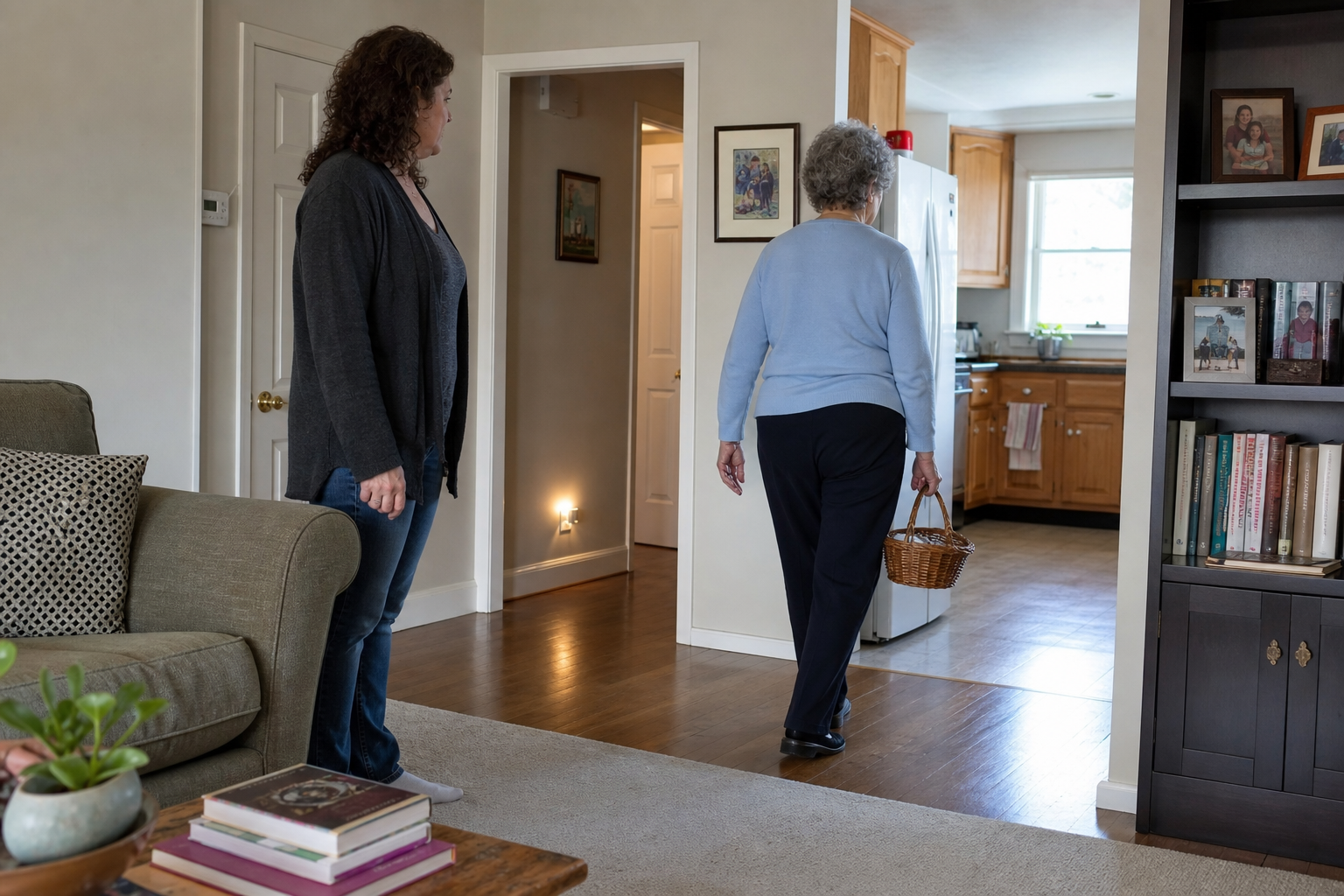
These changes often develop so gradually that the person living in the home no longer notices them. Adult children, on the other hand, frequently recognize the differences after returning for a visit. They may notice their parent using furniture for balance, pausing before climbing stairs, or avoiding certain parts of the house altogether.
A fall risk assessment is simply a structured way of looking at these everyday situations before they lead to an injury. It focuses on how a person actually lives instead of how they perform during a brief medical examination. By observing ordinary routines and making practical adjustments, many households can reduce fall risk without expensive remodeling or complicated equipment.
What A Fall Risk Assessment For Seniors Should Evaluate
A Fall Risk Assessment For Seniors looks at two things simultaneously: how someone moves and the environment through which they move. Neither tells the whole story by itself.
An older adult may walk confidently across an empty room yet struggle while carrying groceries through a narrow hallway. Another person may have little difficulty during the morning but become noticeably slower after preparing dinner or completing household chores.
Instead of asking someone whether they have balance problems, observe normal daily activities.
Watch how they:
- Get out of bed.
- Walk from the bedroom to the bathroom.
- Carry a cup of coffee into the living room.
- Turn around while cooking.
- Reach into kitchen cabinets.
- Retrieve the mail.
- Feed the dog.
- Take out the trash.
Pay attention to what happens between tasks rather than during them. Does one hand automatically touch the wall? Is there a brief hesitation before stepping over a doorway threshold? Does the person stop walking before turning, or do they pivot while still moving?
These small observations often reveal declining stability long before someone describes themselves as having balance problems.
A useful assessment also considers consistency. Someone who moves safely during the first five minutes may become much less steady after twenty minutes of ordinary activity. Fatigue changes movement, and movement affects fall risk.
Recognizing Early Warning Signs Before A Fall Occurs
Many families assume a fall comes without warning. In reality, there are often months of subtle changes beforehand.
One of the earliest signs is hesitation.
An older adult who once moved confidently may begin pausing before stepping over a curb, climbing stairs, or entering the shower. They are not necessarily afraid. Instead, their brain is quietly allowing extra time to plan each movement.
Other common warning signs include:
- Walking more slowly than before.
- Taking shorter steps.
- Shuffling instead of lifting the feet.
- Holding onto countertops while passing through the kitchen.
- Choosing routes with more furniture available for support.
- Sitting down harder than intended.
- Taking several attempts to stand.
- Looking down constantly while walking.
Some changes are behavioral rather than physical.
An older adult may begin leaving frequently used items in several rooms because carrying them across the house feels inconvenient. They might postpone laundry until absolutely necessary because carrying a basket has become tiring. They may avoid answering the door if it requires moving quickly.
These adaptations often make perfect sense from the person's perspective. Unfortunately, they also indicate that ordinary activities are becoming more physically demanding.
Because these changes happen gradually, they are easy to dismiss individually. When viewed together, however, they form a pattern that deserves attention.
Observe Daily Routines Instead Of Testing Balance
One of the biggest mistakes families make is turning a fall risk assessment into a performance test.
When someone knows they are being evaluated, they naturally become more careful. They concentrate on every step, avoid distractions, and deliberately demonstrate their best walking.
Real life is different.
Falls usually happen while doing something else.
Someone is carrying groceries.
They are talking while walking.
The telephone rings.
The dog moves underfoot.
They remember they forgot their glasses and turn around too quickly.
For that reason, the most valuable observations occur during completely ordinary routines.
Watch how someone prepares breakfast.
Notice whether they twist while reaching into lower cabinets. See if they lean heavily against the countertop while waiting for the coffee maker. Observe whether they carry several items at once rather than making two easier trips.
The same approach works throughout the home.
Does the person back away from the refrigerator without looking?
Do they carry laundry high enough to block their view of the floor?
Do they hurry toward the bathroom after standing up?
These everyday behaviors provide a much clearer picture of fall risk than asking someone to walk across an empty room.
Many people remain capable of walking well. They experience difficulty only after distractions, fatigue, awkward loads, poor lighting, or rushed decisions are added to the situation.
Those are exactly the conditions that a Fall Risk Assessment For Seniors should identify before they contribute to an injury.
Assessing Walking Paths Throughout The Home
A Fall Risk Assessment For Seniors should follow the routes someone uses every day rather than inspecting each room independently. Falls usually occur while moving between activities, not while standing still.
Start at the front door and mentally walk through a normal day.
How does someone get from the bedroom to the bathroom?
From the kitchen to the dining table?
From the living room to the mailbox?
From the garage carrying groceries?
Every route should be wide enough to allow natural movement without turning sideways or squeezing around furniture.
Pay particular attention to places where direction changes. A ninety-degree turn into a bathroom or around the end of a kitchen island requires considerably more balance than walking down a straight hallway. Corners also tend to collect objects over time. A decorative table, a stack of magazines, a plant stand, or a pet bed can gradually reduce walking space until someone unconsciously begins changing how they walk.
Look down as well as ahead.
Common hazards include:
- Curled area rugs.
- Electrical cords stretched across walkways.
- Shoes left beside the front door.
- Boxes waiting to be taken to storage.
- Uneven flooring where one room meets another.
- Extension cords running behind furniture.
- Small waste baskets placed in walking paths.
Many households develop these obstacles gradually. Because they remain in the same location every day, the person living there simply learns to walk around them. The problem appears when fatigue, distraction, or poor lighting causes one small misstep.
Lighting deserves just as much attention as flooring.
Walk through the home in the evening with only the lights normally used. Hallways that seem bright during the day may become surprisingly dim after sunset. Shadows can make slight elevation changes difficult to judge, especially for someone with reduced vision.
Nighttime bathroom trips deserve particular attention. Older adults often avoid turning on every light because they do not want to disturb a spouse or because bright light feels uncomfortable after sleeping. Motion-activated night lights or inexpensive plug-in lights can improve visibility without requiring major electrical work.
One simple exercise is to walk every frequently used path while carrying something that partially blocks your view, such as a laundry basket or grocery bag. Hazards that seemed obvious with empty hands suddenly become much more difficult to see.
Looking Beyond Physical Hazards
Not every fall risk comes from the floor.
Many develop because routines become more complicated as strength, endurance, vision, or memory gradually change.
An older adult who once carried two bags of groceries into the house without thinking may now make several smaller trips. Someone else may continue carrying everything at once because that is what they have always done, even though balance has changed considerably.
Pay attention to behavior rather than simply looking for hazards.
Questions worth asking include:
- Does the person rush because they dislike asking for help?
- Are commonly used items scattered throughout multiple rooms?
- Is medication stored in several different locations?
- Does clutter accumulate because carrying boxes has become difficult?
- Are they postponing household chores that once felt easy?
Fatigue often plays a larger role than families realize.
An older adult may move confidently after breakfast yet become noticeably slower by late afternoon. Preparing meals, vacuuming, gardening, shopping, or entertaining visitors can leave someone physically tired long before they recognize it themselves.
That is often when falls occur.
Observing movement at different times of the day provides a much more accurate picture than watching someone for only a few minutes.
A Fall Risk Assessment For Seniors should also recognize that people naturally adapt to declining ability. They may no longer use the guest bedroom upstairs. They may avoid carrying laundry until someone else visits. They may stop retrieving holiday decorations from the attic because the stairs no longer feel comfortable.
These quiet adjustments often represent thoughtful self-protection rather than laziness. Recognizing them allows families to make practical changes before an injury forces much larger decisions.
Evaluating Furniture, Transfers, And Everyday Movement
Walking is only part of a Fall Risk Assessment For Seniors. Many falls occur while standing up, sitting down, reaching, bending, or turning around.
Begin by looking at the furniture used most often.
Watch someone stand up from their favorite chair.
Do they rise smoothly?
Do they rock forward several times before standing?
Do they immediately reach for a nearby table?
Do they remain motionless for a few seconds before taking the first step?
That first step is often the least stable. Blood pressure may briefly change after standing, muscles may still be adjusting, and balance may not yet be fully established. Rushing immediately after standing increases the likelihood of losing balance.
The same observations apply throughout the home.
Notice how someone gets into bed.
How they gets out of bed during the night.
Whether they use the armrests on dining chairs.
How they enter and leave the bathtub or shower.
Whether they twist while carrying objects from one countertop to another.
Many households unknowingly create unnecessary physical work.
Frequently used dishes are stored on the highest shelf.
Heavy pots remain in low cabinets requiring deep bending.
Cleaning supplies are scattered throughout the house, encouraging repeated trips up and down stairs.
Laundry detergent is stored behind other containers that must be moved first.
None of these situations appears dangerous in isolation. Together they require hundreds of unnecessary bending, reaching, twisting, and lifting movements every week.
A practical assessment asks whether the home fits the person instead of expecting the person to continually adapt to the home.
Simple changes often provide meaningful improvements.
Store everyday items between waist and shoulder height whenever possible.
Keep frequently used supplies close to where they are needed.
Reduce the number of trips required to complete common household tasks.
Choose stable chairs that remain firmly in place when lightly touched for balance.
These adjustments cost little, yet they reduce physical strain throughout the day.
Transfer Safety And Aging In Place
Repeating A Fall Risk Assessment After Life Changes
A Fall Risk Assessment For Seniors should never be viewed as something that is completed once and forgotten. Homes change. Health changes. Daily routines change. A house that supported safe independence two years ago may present entirely different challenges today, even though nothing obvious appears to have changed.
Certain events should always prompt another assessment.
These include:
- A fall, even if no injury occurred.
- Returning home after a hospitalization.
- Beginning a new medication.
- Recovering from an illness.
- Noticeable vision changes.
- Switching from a cane to a walker.
- Rearranging furniture.
- Moving into a new home.
Families often assume the assessment should focus only on the older adult. In reality, the home should also be reassessed.
For example, someone may recover well after knee surgery but now requires a walker that is several inches wider than the cane previously used. Hallways that once felt spacious may suddenly become awkward to navigate. Decorative furniture that was never a problem before now forces repeated tight turns. A bathroom doorway may become the narrowest point in the house.
Lifestyle changes matter as well.
Perhaps a spouse who once carried laundry is no longer able to help. Maybe a grandchild has moved in temporarily, leaving toys in walking paths. A recently adopted dog sleeps in the hallway every evening. None of these situations automatically makes the home unsafe, but each changes how people move through it.
Many adult children discover these gradual changes only after spending an entire day with a parent instead of stopping by for a brief visit. Watching someone prepare meals, answer the door, retrieve the newspaper, care for pets, and get ready for bed provides a much more complete picture than asking whether everything is going well.
For that reason, a Fall Risk Assessment For Seniors is best viewed as an ongoing observation rather than a one-time inspection.
Small Changes Usually Prevent Bigger Problems
Many people delay making changes because they believe improving safety requires an expensive remodel. Fortunately, that is rarely the case.
The most effective improvements are often the simplest because they reduce dozens of unnecessary movements every single day.
Consider whether everyday objects are located where they are actually used.
Would keeping reading glasses in the living room eliminate repeated trips across the house?
Would moving frequently used cookware to an upper cabinet reduce the need to bend several times each day?
Would placing a laundry basket on a small wheeled cart reduce the need to carry heavy loads?
Would replacing a burned-out hallway bulb improve visibility enough to make nighttime walking noticeably easier?
Individually, these changes appear minor.
Collectively, they reduce fatigue, awkward reaching, hurried decisions, and unnecessary walking. Over months and years, those small reductions in physical strain become meaningful.
It is also important to recognize that people value their routines.
Removing every chair, decorative table, or familiar object in the name of safety can make a house feel unfamiliar and uncomfortable. A thoughtful assessment looks for balance. The goal is to preserve independence while removing hazards that provide little benefit.
The best home is not one that resembles a rehabilitation facility. It is one where everyday activities can be completed naturally, comfortably, and with fewer opportunities for losing balance.
© 2026 Mark Fomenko. All rights reserved.
AgingInPlaceResource.com
Privacy Policy | Terms of Use | Disclaimer | Contact | Newsletter
Recent Articles


-
Aging In Place Resource Library
Sep 04, 26 08:30 AM
Aging In Place Resource Library -
Aging in Place Resource Newsletter
Aug 30, 26 11:16 AM
Aging in Place Resource Newsletter -
Aging in Place Resource: Simple Strategies for Living Safely at Home
Jul 28, 26 12:43 PM
 Aging in Place Resource provides practical guidance for aging in place. Learn how to live safely and independently at home with strategies for home safety, caregiving, planning, and long-term support.