Fall Risk After Hospitalization
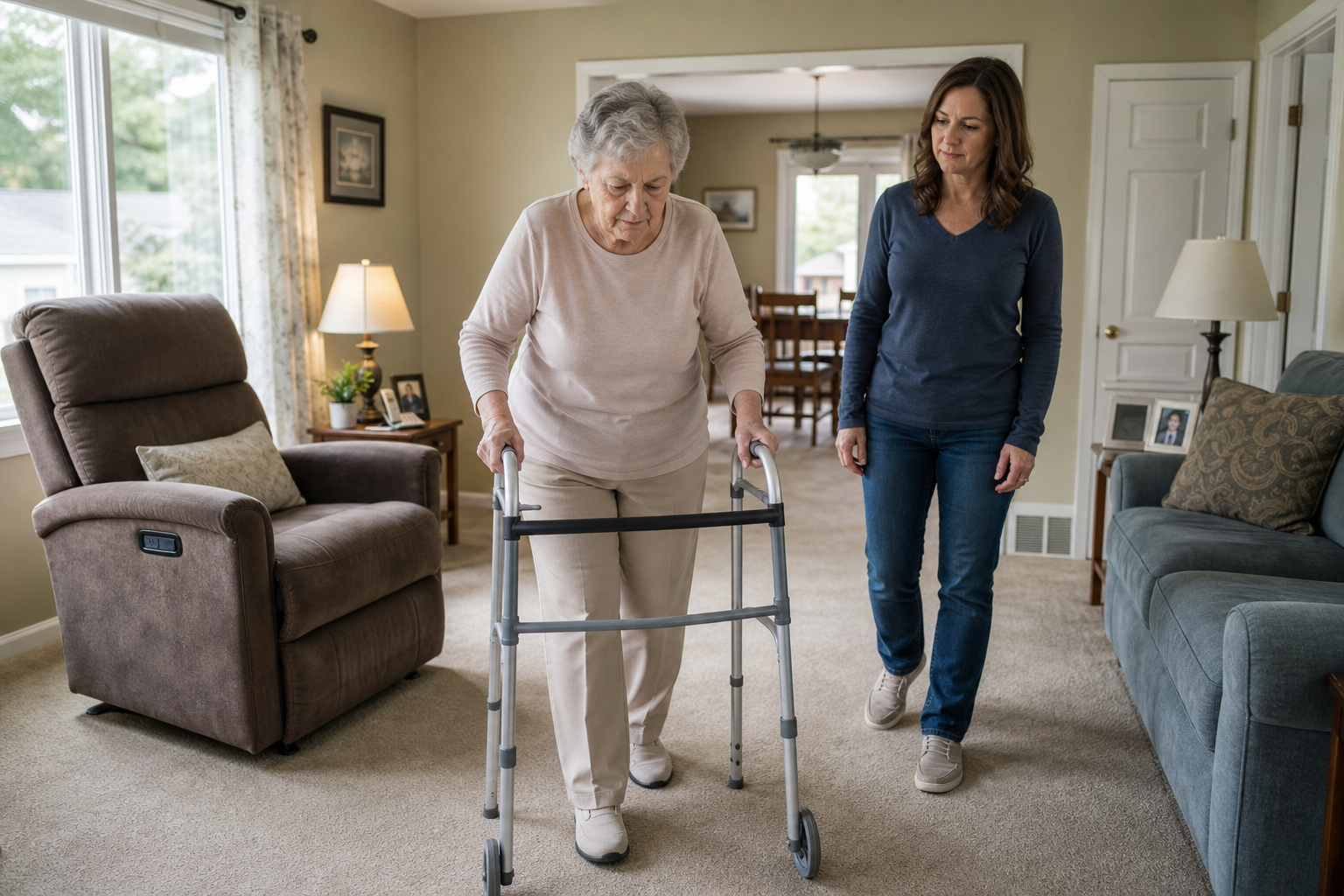
Fall Risk After Hospitalization is a common problem that many families underestimate. An older adult may return home looking much better than they did during a hospital stay, yet still be significantly weaker, less steady, and more vulnerable to injury than before.
A few days in a hospital bed can reduce strength surprisingly quickly. Walking distances become shorter. Standing up takes more effort. Balance may be less reliable. Medications may have changed. Simple household tasks that were once routine can suddenly become difficult.
The weeks immediately after returning home are often a period of adjustment. Understanding where problems commonly occur can help families reduce risk while supporting independence and recovery.
Understanding Fall Risk After Hospitalization
Fall Risk After Hospitalization often develops because several small changes occur at the same time rather than from a single major problem.
An older adult may experience:
- Reduced leg strength
- Increased fatigue
- Slower reaction time
- New medications
- Temporary confusion
- Decreased balance
- Reduced confidence while walking
A person who was previously independent may suddenly find it difficult to carry laundry, stand from a chair, climb stairs, or walk long distances.
Family members sometimes assume that discharge from the hospital means a person has fully recovered. In reality, discharge often means the individual is stable enough to continue recovery at home.
The transition period is frequently when falls occur.
Why The First Few Weeks Are Often The Most Dangerous
The highest Fall Risk After Hospitalization often occurs during the first several weeks at home.
Many older adults are eager to return to their normal routines. They may try to resume activities before their strength and endurance have fully returned.
Common situations include:
- Carrying groceries
- Taking out trash
- Climbing stairs repeatedly
- Walking long distances
- Reaching overhead
- Moving furniture
- Rushing to answer the phone
Fatigue is often underestimated. Someone may appear fine in the morning but become noticeably weaker by late afternoon.
Adult children frequently discover that a parent who could walk through a hospital hallway with assistance struggles when navigating a cluttered home, uneven flooring, pets, narrow pathways, and everyday distractions.
Walking And Movement Problems After Returning Home
Walking patterns often change after hospitalization.
A person may:
- Shuffle their feet
- Walk more slowly
- Hesitate before stepping
- Hold onto furniture
- Take shorter steps
- Turn less smoothly
These changes may seem minor but can significantly increase fall risk.
Pay particular attention to areas where direction changes occur.
Common trouble spots include:
- Around beds
- Near recliners
- Bathroom entrances
- Kitchen work areas
- Hallway corners
Furniture that was once easy to navigate may now create obstacles.
Walking paths should remain wide, predictable, and free from unnecessary objects.
How To Prevent Falls In The Home
Fatigue Can Create Hidden Fall Hazards
One of the most overlooked contributors to Fall Risk After Hospitalization is simple exhaustion.
Many older adults become tired much more quickly than expected.
Tasks that once required little effort may now require frequent breaks.
Examples include:
- Showering
- Dressing
- Preparing meals
- Carrying laundry
- Vacuuming
- Making beds
As fatigue increases, judgment often declines.
People may rush.
They may stop using a walker.
They may skip turning on lights.
They may attempt activities that would have been manageable before hospitalization but are no longer safe.
Observing how someone functions at different times of day often reveals problems that are not obvious during a short visit.
Medication Changes And Fall Risk
Hospital stays frequently result in medication adjustments.
New prescriptions may be added. Existing medications may be increased, decreased, or discontinued.
Common side effects can include:
- Dizziness
- Drowsiness
- Lightheadedness
- Balance problems
- Blurred vision
- Slower reaction times
Medication-related falls often occur when standing up too quickly after sitting or lying down.
Pay attention to complaints such as:
- "I feel a little dizzy."
- "I feel weak today."
- "I feel unsteady."
These comments are often early warning signs.
Medication Side Effects And Fall Risk
For additional information about medication safety, visit:
NIH Medication Changes And Fall Risk
Making The Home Easier To Navigate
Reducing Fall Risk After Hospitalization does not usually require expensive remodeling.
Small changes often provide substantial benefits.
Consider:
- Removing loose rugs
- Improving lighting
- Reducing clutter
- Organizing frequently used items
- Keeping cords out of walkways
- Creating wider walking paths
- Relocating commonly used supplies
A simple goal is to reduce the number of decisions and obstacles a person encounters while moving through the home.
Furniture should support movement rather than complicate it.
Chairs with sturdy arms often make standing easier.
Items used daily should be stored between waist and shoulder height whenever possible.
Transfer Safety Matters More Than Many Families Realize
Many falls occur during transfers rather than while walking.
Common transfer situations include:
- Getting out of bed
- Standing from a chair
- Getting off a toilet
- Entering a shower
- Getting into a vehicle
A person may appear steady once standing but struggle during the transition itself.
Watch for:
- Rocking repeatedly before standing
- Pulling on unstable furniture
- Losing balance during turns
- Sitting down abruptly
Rushing increases risk.
Encouraging slower, deliberate movement often improves safety more than any equipment purchase.
Transfer Safety And Aging In Place
Monitoring Recovery Without Taking Away Independence
Families often struggle to find the balance between safety and independence.
Most older adults want to resume normal activities as quickly as possible.
That desire is understandable.
The goal is not to eliminate independence but to recognize temporary limitations while recovery continues.
Practical monitoring may include:
- Checking walking ability regularly
- Watching for increasing fatigue
- Observing transfer difficulty
- Looking for near-falls
- Noticing changes in confidence
- Identifying new household obstacles
Small adjustments made early can prevent larger problems later.
Building Safer Daily Routines During Recovery
The most effective way to reduce Fall Risk After Hospitalization is often through predictable daily habits.
Consistent routines reduce rushing, confusion, and unnecessary physical strain.
Helpful practices include:
- Turning on lights before moving around
- Wearing supportive footwear
- Taking time when standing up
- Using mobility aids consistently
- Taking rest breaks before exhaustion develops
- Keeping frequently used items nearby
- Asking for help with difficult tasks
Recovery rarely follows a straight line.
Some days will be stronger than others.
A realistic approach recognizes that temporary weakness is common after hospitalization and that small environmental adjustments can make everyday movement significantly safer.
By reducing obstacles, improving visibility, simplifying routines, and paying attention to fatigue, many families can successfully lower Fall Risk After Hospitalization while helping an older adult remain independent at home.
© 2026 Mark Fomenko. All rights reserved.
AgingInPlaceResource.com
Privacy Policy | Terms of Use | Disclaimer | Contact | Newsletter
Recent Articles


-
Aging In Place Resource Library
Sep 04, 26 08:30 AM
Aging In Place Resource Library -
Aging in Place Resource Newsletter
Aug 30, 26 11:16 AM
Aging in Place Resource Newsletter -
Aging in Place Resource: Simple Strategies for Living Safely at Home
Jul 28, 26 12:43 PM
 Aging in Place Resource provides practical guidance for aging in place. Learn how to live safely and independently at home with strategies for home safety, caregiving, planning, and long-term support.