Fall Prevention For Seniors With Poor Vision
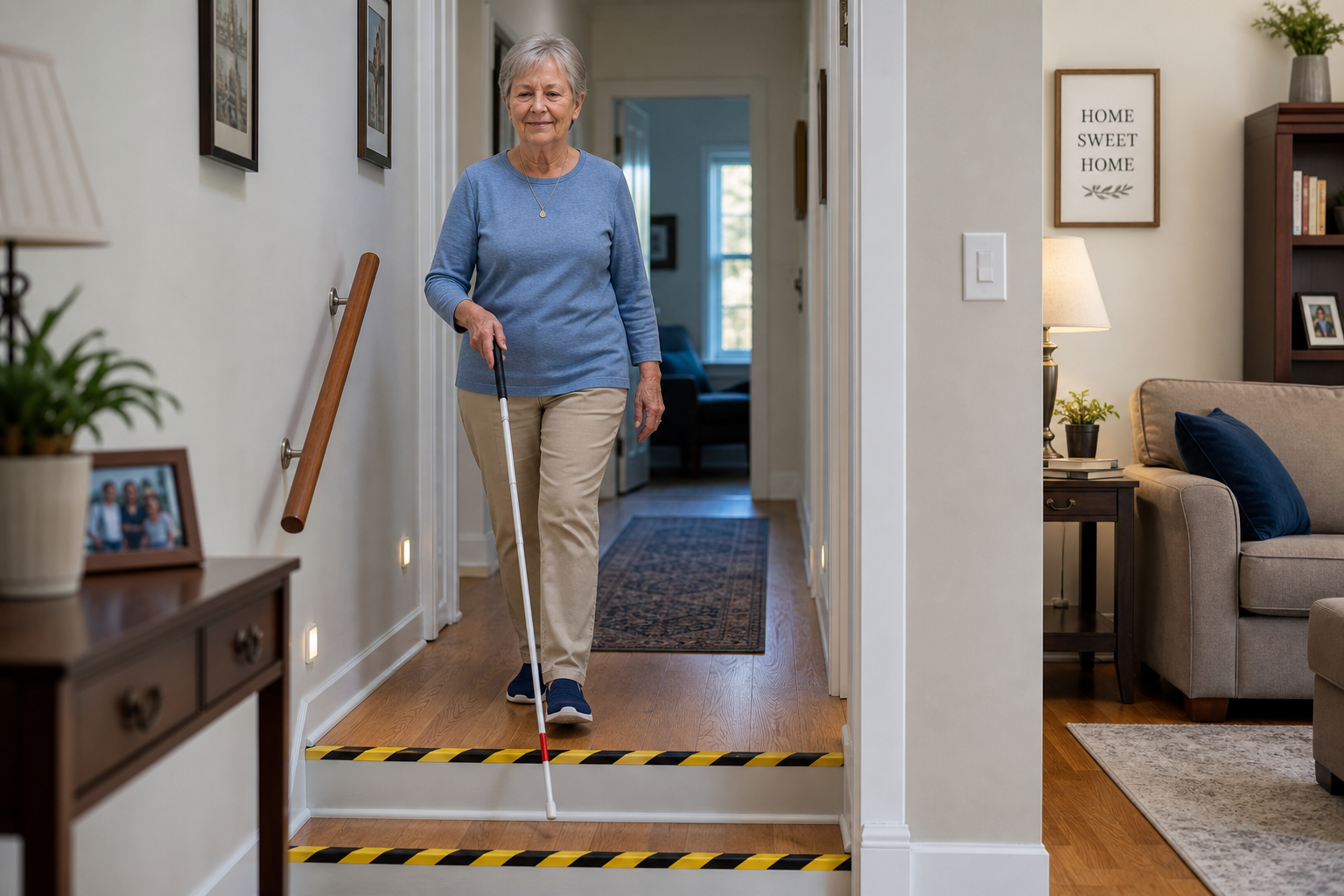
Fall Prevention For Seniors With Poor Vision becomes increasingly important when reduced eyesight begins affecting everyday activities. Many falls occur not because someone loses strength or balance, but because they fail to see a hazard in time to avoid it.
Poor vision can make ordinary household features more dangerous. Changes in floor surfaces, clutter, dim lighting, electrical cords, pets, and furniture can become difficult to detect. Reduced contrast sensitivity, depth perception problems, cataracts, glaucoma, and other vision changes may all contribute to increased fall risk.
Fortunately, many hazards can be addressed without expensive remodeling. Small changes to lighting, organization, walking routes, and daily habits can make a home safer while helping older adults maintain independence.
Why Poor Vision Increases Fall Risk
Fall Prevention For Seniors With Poor Vision begins with understanding why vision matters so much for safe movement.
Walking is not simply a matter of moving from one room to another. Every step involves constant visual assessment of surfaces, obstacles, distances, and changes in elevation.
Vision problems can make it difficult to notice:
- Area rugs
- Electrical cords
- Pet toys
- Small objects on the floor
- Uneven flooring
- Steps and thresholds
- Wet surfaces
- Changes in floor color
Even familiar homes can become hazardous when visibility declines.
Many older adults adapt gradually to worsening vision and may not realize how much they rely on memory rather than sight when moving through the house. This works most of the time until an unexpected object appears in a walking path.
Improving Lighting Throughout The Home
One of the most effective strategies for Fall Prevention For Seniors With Poor Vision is improving lighting.
Many homes simply do not provide enough light for aging eyes. Vision changes associated with aging often make it more difficult to distinguish objects, detect changes in floor surfaces, and adapt to varying light levels. Areas that seem adequately lit to younger family members may feel surprisingly dim to an older adult.
Common problem areas include:
- Hallways
- Stairways
- Entryways
- Bathrooms
- Laundry rooms
- Closets
- Garages
Poor lighting creates two separate problems. First, obstacles become harder to see. Second, depth perception and contrast become less reliable. A person may struggle to determine where a step begins, where a hallway ends, or whether an object is sitting in a walking path.
Consider:
- Replacing dim bulbs with brighter alternatives
- Adding lamps in dark corners
- Using consistent lighting throughout connected rooms
- Eliminating burned-out bulbs immediately
- Improving task lighting near frequently used areas
- Increasing lighting at stairs and entrances
- Adding lighting near favorite chairs and bedside areas
Sudden transitions between bright and dark spaces can be particularly difficult. Consistent lighting often improves visibility more effectively than adding a single very bright fixture.
For example, a brightly illuminated kitchen connected to a dark hallway may temporarily reduce visibility as the eyes adjust. During those few moments, thresholds, furniture, and obstacles can become harder to detect.
Shadows also deserve attention. A room may technically be well lit while still containing dark areas behind furniture, beside doorways, or near corners. These shadows can obscure objects and create visual confusion. Some older adults begin avoiding certain areas of the home simply because visibility feels uncertain.
Light switches should be easy to reach and located where they are needed most. Walking across a dark room to reach a switch defeats the purpose of having good lighting available. Lamps positioned near favorite chairs, beds, and frequently used entrances often improve safety because they allow lighting to be activated before movement begins.
Stairways deserve special attention. Steps can become difficult to distinguish when lighting is uneven or shadows fall across the stair surface. Consistent illumination from top to bottom helps make changes in elevation easier to recognize.
Adult children often discover lighting problems during evening visits. Areas that appear acceptable during daylight may become noticeably dim after sunset. Walking through the home at night is one of the simplest ways to identify locations where additional lighting may improve safety.
Many older adults gradually adapt to poor lighting without realizing how much it affects daily activities. They may move more slowly, hesitate before entering certain rooms, or rely on touching walls and furniture for guidance. These behaviors often indicate that visibility has become a challenge.
Good lighting cannot eliminate every fall risk, but it makes hazards easier to detect and allows people to move with greater confidence. Among all home safety improvements, better lighting is often one of the least expensive and most effective changes that can be made.
Home Lighting Safety For Seniors
Creating Clear And Predictable Walking Paths
Fall Prevention For Seniors With Poor Vision often depends on removing obstacles rather than adding equipment.
Many older adults with reduced vision rely heavily on familiarity. They learn where furniture is located, where doorways begin, and how to move through the home using a combination of sight, memory, and habit. When walking routes remain consistent, movement generally becomes safer and more efficient.
Walking routes should be:
- Direct
- Wide
- Predictable
- Free of clutter
Pay particular attention to pathways between:
- Bedroom and bathroom
- Living room and kitchen
- Front door and main living areas
- Bedroom and favorite chair
- Bathroom and kitchen
These are the routes most people use repeatedly throughout the day. A hazard that might be encountered twenty or thirty times each day presents a greater risk than one located in a rarely used room.
Common obstacles include:
- Decorative tables
- Plant stands
- Magazine racks
- Storage bins
- Shoes
- Laundry baskets
- Pet beds
- Exercise equipment
- Folding chairs
- Boxes waiting to be put away
Furniture arrangements that seem reasonable during the day may create hazards when lighting is poor or vision is limited.
Many homes gradually become more crowded over time. A table is added here, a basket is placed there, and eventually walking paths begin narrowing without anyone noticing. The changes occur so slowly that they become part of the environment.
For someone with poor vision, narrow pathways can create several problems. They may require more turning, more sidestepping, and more opportunities to bump into objects. Small navigation adjustments that are easy for a person with good vision can become difficult when obstacles are harder to see.
Pay particular attention to corners and transition areas. A person moving from one room to another may be focused on the destination rather than the path itself. Plant stands, decorative items, and small tables often occupy these locations and can become collision hazards.
Consistency matters as much as visibility.
A chair that remains in the same location for years is often easier to navigate around than a chair that is frequently moved. People with reduced vision often develop mental maps of their homes. They expect furniture to be where it was yesterday. Unexpected changes can disrupt those expectations and increase fall risk.
This issue commonly appears when family members visit and reorganize a room. What seems like an improvement to a visitor may create confusion for the person who lives there every day. Before moving furniture, consider whether the change actually improves safety or simply changes a familiar environment.
Walking paths should also remain clear of temporary storage. Hallways often become convenient places for boxes, grocery bags, cleaning supplies, and packages. These items may only remain there for a few hours, but many falls occur because someone encounters an object that was not present during previous trips through the area.
A useful exercise is to walk the most frequently traveled routes in the home and deliberately look for anything that requires stepping around, reaching around, or changing direction. Every unnecessary obstacle increases the complexity of movement.
A clear path allows a person to focus on walking rather than navigating around unnecessary objects. For older adults with reduced vision, simplifying travel routes is often one of the most effective and affordable fall-prevention strategies available.
How To Prevent Falls In The Home
Reducing Trip Hazards On Floors
Floor surfaces deserve special attention when addressing Fall Prevention For Seniors With Poor Vision.
Many falls begin with a foot catching an object that was difficult to see. In some cases the hazard is obvious in daylight but nearly invisible under ordinary household lighting. In other cases the object simply does not belong on the floor at all.
Look for:
- Throw rugs
- Loose carpeting
- Wrinkled floor mats
- Extension cords
- Power strips
- Pet feeding stations
- Small floor decorations
- Shoes left near doorways
- Laundry baskets
- Storage boxes
- Pet toys
A common problem is that people become accustomed to stepping around obstacles. A basket in the hallway or a pair of shoes near the bedroom door may not seem dangerous because they have been there for months. However, when vision declines, these familiar objects become harder to detect and easier to forget.
Pay attention to areas where people naturally turn, pivot, or change direction. These locations often present greater risk than long straight walking paths. For example, a person may safely walk across a room but catch a foot on a small rug while turning toward a chair or doorway.
Floor surfaces themselves can also create confusion. Patterned carpeting, dark-colored flooring, and abrupt color changes sometimes make it difficult to judge depth and distance. Some older adults begin taking unusually high steps over shadows or floor patterns because they mistakenly perceive them as obstacles.
Changes in elevation deserve special attention. Even a small threshold between rooms can become a trip hazard if it is difficult to distinguish from the surrounding floor.
High-contrast markings can help identify:
- Step edges
- Changes in floor level
- Thresholds
- Transitions between rooms
The goal is not to make the home look institutional. The goal is to make important features easier to recognize at a glance.
Pet owners should also evaluate where animals spend their time. Food bowls, water dishes, beds, and sleeping pets can create hazards when they blend into flooring or sit within common walking routes. Your own dog sleeping in the same spot every day may seem predictable until one night it decides to sleep somewhere else.
Adult children often notice floor hazards during visits because they are not accustomed to them. Objects that have gradually become part of the environment may stand out immediately to a visitor. Walking through the home while consciously looking for tripping hazards often reveals risks that have gone unnoticed for years.
Keeping floors clear is one of the simplest and least expensive safety improvements available. Many fall-prevention measures require planning and effort, but removing unnecessary objects from walking paths can often be done in a single afternoon and may immediately reduce risk.
Making Nighttime Movement Safer
Many falls occur during nighttime bathroom trips.
Vision is often at its worst when someone wakes suddenly, stands quickly, and begins walking through a dark house. Even individuals who move safely during the day may struggle when lighting is limited and they are still groggy from sleep.
Several factors combine to increase risk at night:
- Reduced visibility
- Fatigue
- Slower reaction times
- Dizziness after standing
- Urgency to reach the bathroom
- Poor depth perception
- Unfamiliar shadows and contrasts
Many people do not fully wake before getting out of bed. They rely on memory rather than clear vision to navigate the room. A chair that has been moved, a pet lying in the hallway, or an object left on the floor can quickly become a trip hazard.
Nighttime safety measures may include:
- Plug-in night lights
- Motion-activated lighting
- Illuminated pathways
- Flashlights near the bed
- Consistent furniture placement
- Clear walking routes between the bed and bathroom
Lighting should illuminate the entire route rather than a single location. A bright bathroom does little good if the hallway leading to it remains dark.
Avoid rearranging furniture frequently. A route that becomes familiar through repetition is generally easier to navigate safely. Many older adults develop mental maps of their homes and use those expectations to compensate for declining vision. Unexpected changes can create confusion and increase the likelihood of bumping into furniture or tripping over obstacles.
Before standing:
- Sit briefly on the edge of the bed
- Allow dizziness to pass
- Turn on available lighting
- Stabilize before walking
- Put on footwear if needed
Rushing is a common factor in nighttime falls. Some people become concerned about reaching the bathroom quickly and begin moving before they are fully steady. Taking a few extra seconds at the bedside is often safer than trying to recover from a loss of balance halfway down the hallway.
Adult children frequently discover nighttime hazards during visits. Laundry baskets left in hallways, shoes near the bed, electrical cords, pet beds, and small tables can all become obstacles when visibility is reduced. A route that appears safe during daylight may look very different at two o'clock in the morning.
The combination of poor vision, darkness, fatigue, and rushing can significantly increase fall risk. Creating a well-lit, predictable path between the bed and bathroom is one of the most effective nighttime fall-prevention measures for older adults with reduced vision.
Choosing Furniture And Seating Carefully
Furniture placement can either improve or worsen safety.
Fall Prevention For Seniors With Poor Vision often involves simplifying room layouts rather than adding new equipment. A room that contains too many small pieces of furniture can become difficult to navigate when visibility is limited.
Consider whether furniture:
- Narrows walking paths
- Creates blind corners
- Has difficult-to-see edges
- Forces awkward turns
- Sits unexpectedly in common travel routes
- Requires stepping around obstacles to move through a room
Many people gradually accumulate small tables, magazine racks, plant stands, decorative items, storage baskets, and footstools. Individually these items may seem harmless. Together they can create a maze of obstacles that becomes increasingly difficult to navigate safely.
Glass tables deserve particular caution because their edges may be difficult to detect. Transparent surfaces can blend into the background, especially in rooms with limited lighting or visual clutter. Sharp corners can also increase injury risk if a fall occurs.
Coffee tables are another common problem area. They are often located directly between seating and walking paths, creating obstacles that must be navigated repeatedly throughout the day.
Chairs should be:
- Stable
- Easy to identify visually
- Positioned consistently
- Easy to stand from
- Equipped with armrests when possible
- Tall enough to allow comfortable standing
Deep, soft chairs may feel comfortable but can be difficult to rise from safely. Low seating often requires greater strength and balance during transfers. Many falls occur when someone struggles to stand and reaches for nearby furniture that cannot support their weight.
Contrast can also improve safety. A dark chair against a dark carpet or a light chair against a light wall may be harder to distinguish for someone with reduced vision. Furniture that stands out clearly from its surroundings is generally easier to locate and use safely.
Avoid frequently moving chairs, footstools, small tables, pet beds, or decorative items. People with declining vision often rely heavily on familiarity and memory when moving through the home. They develop expectations about where objects are located. When furniture is moved unexpectedly, even by a few feet, the risk of bumping into it or tripping over it increases.
This issue sometimes becomes apparent when adult children visit and reorganize a room to make it look neater. What appears to be an improvement may create confusion for the person who lives there every day. A chair that has been in the same location for years often serves as a visual landmark and reference point.
The safest rooms are usually not the most heavily furnished. They are the rooms where walking paths are obvious, seating is stable, and furniture remains predictable from one day to the next. Consistency often contributes more to safety than constant rearranging or redecorating.
Supporting Safe Transfers And Daily Activities
Many falls occur during routine movements rather than during walking.
Standing up, sitting down, getting in and out of bed, and using the bathroom all require balance, coordination, and the ability to judge distances accurately. When vision is reduced, these everyday movements can become more difficult.
Examples include:
- Standing from a recliner
- Getting out of bed
- Rising from the toilet
- Entering or exiting a shower
- Reaching for commonly used items
- Turning while carrying objects
Poor vision can make it harder to judge where a chair begins, how far away a grab bar is, or whether a foot is positioned safely before standing. Some people begin reaching for nearby furniture because they cannot clearly see more stable supports.
Pay attention to moments of hesitation. A person who pauses before sitting down, reaches cautiously toward a chair, or searches for something to hold onto may be revealing a growing difficulty with vision, balance, or both.
Helpful strategies include:
- Keeping frequently used items within easy reach
- Maintaining consistent furniture placement
- Using adequate lighting before standing
- Avoiding rushed movements
- Organizing commonly used objects in predictable locations
- Keeping pathways clear around beds, chairs, and toilets
Many falls occur because someone tries to perform a familiar task too quickly. A person may stand up in a dim room, turn immediately, and lose balance before their eyes have adjusted to the available light.
Adult children often notice these changes during visits. A parent may hesitate before standing, reach for unstable furniture, misjudge the location of a chair, or struggle to locate objects that appear to be in plain sight. These small observations can provide early warning signs that additional safety measures may be needed.
Practical Habits For Fall Prevention For Seniors With Poor Vision
Fall Prevention For Seniors With Poor Vision works best when environmental improvements are combined with consistent daily habits.
Simple routines often provide substantial benefits.
Examples include:
- Returning objects to the same locations
- Keeping walking paths clear every day
- Cleaning up spills immediately
- Turning on lights before moving around
- Wearing supportive footwear indoors
- Avoiding carrying large objects that block vision
- Taking extra time when entering unfamiliar environments
Many people assume falls result from dramatic accidents. More often they occur during ordinary activities performed hundreds of times before without incident.
A person may walk safely through a hallway for years and then trip over a single object left temporarily in the path.
Poor vision does not automatically prevent someone from living independently. However, it does require greater attention to visibility, organization, lighting, and household routines. Small adjustments made early often reduce risk far more effectively than major changes made after a serious fall.
For additional guidance related to movement and stability:
© 2026 Mark Fomenko. All rights reserved.
AgingInPlaceResource.com
Privacy Policy | Terms of Use | Disclaimer | Contact | Newsletter
Recent Articles


-
Aging In Place Resource Library
Sep 04, 26 08:30 AM
Aging In Place Resource Library -
Aging in Place Resource Newsletter
Aug 30, 26 11:16 AM
Aging in Place Resource Newsletter -
Aging in Place Resource: Simple Strategies for Living Safely at Home
Jul 28, 26 12:43 PM
 Aging in Place Resource provides practical guidance for aging in place. Learn how to live safely and independently at home with strategies for home safety, caregiving, planning, and long-term support.