When Aging in Place Is No Longer Safe
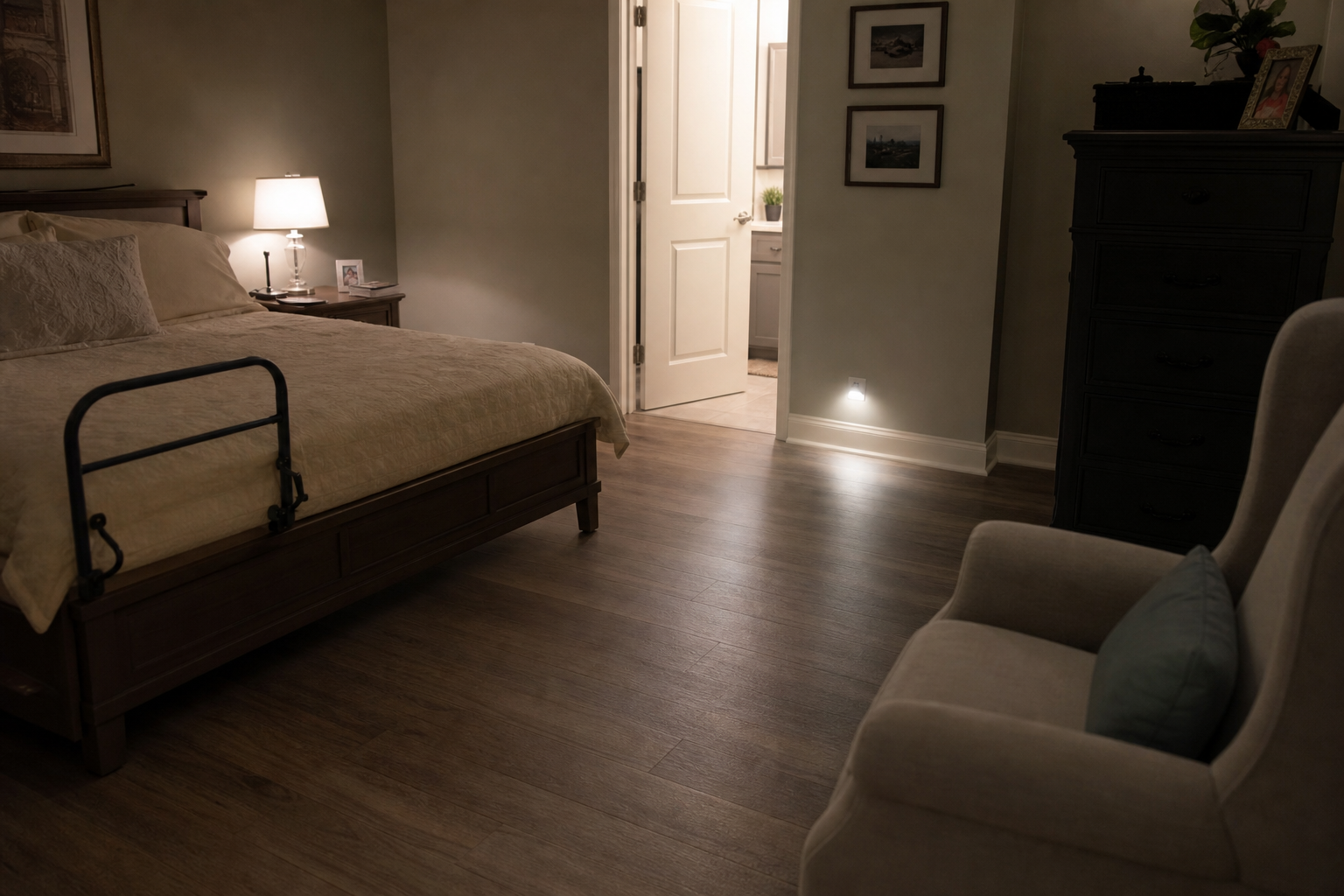
When aging in place is no longer safe, the risks are often subtle at first and then escalate quickly into serious hazards. Declining mobility, slower reaction times, and environmental obstacles combine to create conditions where everyday movements become dangerous. Recognizing this transition early allows for practical adjustments that protect independence while reducing the likelihood of injury.
The bedroom is one of the highest-risk areas because it combines low lighting, frequent transfers, and nighttime movement. Many falls occur when getting in or out of bed or navigating toward the bathroom in the dark. A prevention mindset focuses on controlling these risks through layout, stability, and visibility.
This guide provides clear, actionable steps to identify when conditions have crossed from manageable to unsafe, and what to do next.
Bed Height and Stability When Aging in Place Is No Longer Safe
Bed height and structural stability become critical when aging in place is no longer safe, as transfers are among the most common fall risks. If getting into or out of bed requires effort, rocking, or pushing off unstable furniture, risk increases significantly.
A properly positioned bed allows the feet to rest flat on the floor when seated, with knees at a natural angle. This reduces strain and improves balance during standing. The mattress should not shift, and the frame should not move when weight is applied.
Key adjustments include:
- Lower the bed so both feet rest flat when sitting on the edge
- Install bed risers only if they improve transfer alignment, not height convenience
- Secure the bed frame to prevent sliding during movement
- Add a stable bed rail that supports controlled standing
- Remove rolling furniture nearby that may be grabbed during an imbalance
These physical changes reduce the effort required for each transfer and create predictable, repeatable movement patterns.
Nighttime Navigation and Lighting Hazards
Nighttime movement is one of the strongest indicators that aging in place is no longer safe, especially when visibility is limited, and urgency increases risk. Trips to the bathroom often involve rushing, disorientation, and poor lighting conditions.
Lighting must be continuous and automatic. Relying on switches or memory is unreliable during sleep transitions. The pathway from bed to bathroom must be clearly defined and unobstructed.
Practical improvements include:
- Install motion-activated night lights along the entire path
- Use low-level lighting that does not disrupt vision adjustment
- Remove rugs that shift underfoot during nighttime walking
- Keep the pathway completely clear of furniture or objects
- Ensure light switches are reachable without stepping away from the bed
These changes convert nighttime movement into a controlled process rather than a reactive one.
Floor Surfaces and Trip Hazards
Floor conditions often determine whether aging in place is no longer safe, especially when surfaces are uneven, slippery, or cluttered. Small inconsistencies that once went unnoticed can now lead to falls.
Flooring should be consistent across the room with no abrupt transitions. Traction must be reliable, particularly near the bed and along walking paths.
Focus on the following actions:
- Remove all loose rugs or secure them with non-slip backing
- Eliminate cords and wires that cross walking paths
- Repair uneven flooring or raised thresholds immediately
- Use non-slip finishes on hard surfaces where needed
- Keep floors free of clutter, including shoes and small objects
Consistent surfaces allow the body to move without unexpected adjustments, significantly reducing the risk of falls.
How to Prevent Falls in the Home
Furniture Placement and Movement Flow
When aging in place is no longer safe, poor furniture placement creates unpredictable movement patterns that increase risk. Tight spaces, sharp corners, and blocked pathways force awkward navigation.
Furniture should support movement, not obstruct it. Clear pathways allow for direct, stable walking without sudden turns or obstacles.
Key layout adjustments include:
- Create a straight, unobstructed path from the bed to the door and bathroom
- Position furniture against walls to maximize open space
- Remove low or unstable tables that can shift when touched
- Ensure chairs are firm and at a height that supports easy standing
- Avoid placing furniture where it must be navigated around tightly
A controlled layout reduces hesitation and confusion during movement.
Transfer Safety Beyond the Bed
Transfer difficulty is a strong signal that aging in place is no longer safe, especially when it extends beyond the bed to chairs, toilets, and other seating areas. Each transfer point must be stable and predictable.
The goal is to eliminate strain and reduce reliance on upper-body strength alone. Proper support surfaces make standing and sitting controlled rather than risky.
Important adjustments include:
- Use chairs with firm cushions and armrests for support
- Avoid low seating that requires excessive effort to stand
- Install grab bars near key transfer points if needed
- Ensure surfaces do not shift when weight is applied
- Position frequently used seating within easy reach of walking paths
These changes improve confidence and reduce hesitation during movement.
Bathroom Path Risk and Urgency Behavior
Urgency combined with distance is a major factor when aging in place is no longer safe.
The need to reach the bathroom quickly often leads to rushed movement and reduced attention to hazards.
Reducing the distance and difficulty of this path is essential. In some cases, modifying the environment is more effective than relying on behavior changes.
Effective strategies include:
- Place a bedside commode if the bathroom distance is too great
- Keep the bathroom door fully open and visible from the bed
- Ensure the path is wide enough for stable walking
- Install additional lighting specifically along this route
- Remove all obstacles that could cause hesitation or deviation
These actions reduce the pressure to rush and allow controlled movement even in urgent situations.
https://medlineplus.gov/ency/patientinstructions/000021.htm
Warning Signs That Conditions Are Declining
Recognizing early warning signs helps identify when aging in place is no longer safe before a serious fall occurs.
These signs often appear gradually and are easy to dismiss until the risk becomes obvious.
Pay attention to physical and behavioral changes that indicate increasing difficulty with movement or awareness.
Common indicators include:
- Holding onto furniture or walls while walking
- Difficulty standing without using hands or pushing off surfaces
- Slower movement with visible hesitation or imbalance
- Increased clutter or disorganization affecting pathways
- Avoidance of certain movements due to fear of falling
These signs suggest that the environment is no longer aligned with physical ability.
Taking Action Before a Fall Occurs
Taking action early is the most effective way to respond when aging in place is no longer safe.
Waiting for a fall to confirm risk often leads to more serious consequences and reduced independence.
The focus should be on modifying the environment to match current ability, not forcing adaptation to unsafe conditions. Small changes made early are far more effective than major changes made after injury.
Action steps include:
- Conduct a full room-by-room safety assessment
- Adjust layout and remove hazards immediately
- Add support features like rails and lighting where needed
- Reevaluate frequently as conditions change
- Involve caregivers or family members in observing risks
Consistent reassessment ensures that safety evolves with changing needs.
_____________________________________________________________________________________________________
Get clear, practical insights on aging in place sent occasionally, and only when useful.
No spam. No noise. Unsubscribe anytime.
______________________________________________________________________________________________________