Daily Living Aids For Seniors
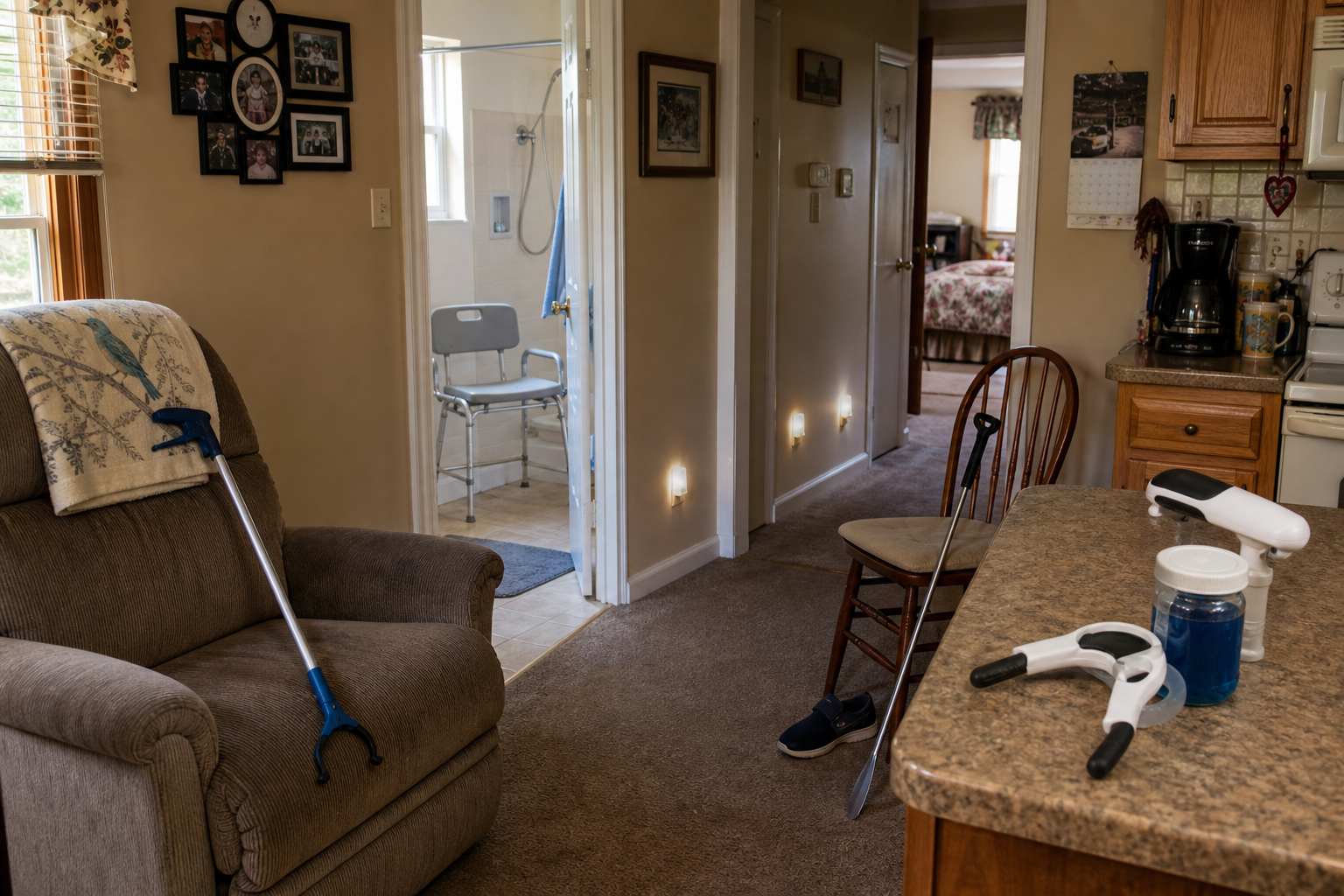
Daily Living Aids For Seniors are practical tools that help older adults handle ordinary home tasks with less bending, reaching, twisting, gripping, or unstable movement. The main safety risk is not the object itself. The risk comes from the awkward movement a person makes when a task has become harder than it used to be.
Small daily tasks can create real risk at home when they require standing on tiptoe, leaning across counters, stepping into a slippery tub, bending too far, or carrying items while balance is already limited. The prevention mindset is simple: change the task before the task causes a fall, strain, or loss of confidence. Many of the best solutions are inexpensive, easy to place, and useful long before major remodeling is needed.
The goal is not to fill the home with equipment. The goal is to choose the few aids that reduce the most risky movements while keeping the home comfortable, familiar, and easy to live in.
Daily Living Aids For Seniors Should Reduce Risky Reaching And Bending
The best daily living aids reduce movements that commonly lead to falls or strain.
Many home injuries begin with a small decision that seems harmless. Someone reaches for a can on a high shelf, bends to pick up a dropped towel, twists from a seated position, or pulls on unstable furniture for support. These actions are easy to overlook because they happen during normal routines, not during dramatic emergencies.
A reacher can be one of the most useful Daily Living Aids For Seniors because it reduces the need to bend to the floor or stretch overhead. It should be kept where it is actually used, not stored in a closet. One reacher in the bedroom and one near the main sitting area may be more useful than one perfect device that is never nearby.
Useful changes include:
- Place frequently used items between waist and shoulder height.
- Keep a reacher near the chair, bed, or laundry area.
- Move heavy items from high shelves to lower shelves.
- Use a small rolling cart instead of carrying several loose items.
- Remove low storage baskets that require deep bending.
Good aids do not force the person to change every habit at once. They make the safer movement the easier movement.
Choose Aids That Match The Person’s Actual Daily Routine
Daily living aids should solve real problems in the rooms where they occur.
A tool that looks useful online may become a source of clutter if it does not fit the person’s routine. Before buying several items, watch the daily pattern. Notice where the person struggles, pauses, grabs furniture, avoids a task, or uses an unsafe workaround. The best purchases usually come from observing ordinary movement, not from buying a full set of products.
Daily Living Aids For Seniors should be chosen by task. A person who cooks daily may need adaptive kitchen tools before bedroom aids. A person who avoids bathing may need bathroom transfer support before jar openers. A person who drops items often may benefit from better placement and reachers before more furniture.
Practical steps include:
- List the three tasks that cause the most visible difficulty.
- Buy one aid at a time and test it for several days.
- Place the aid exactly where the task happens.
- Remove packaging, tags, and unused accessories immediately.
- Stop using any aid that creates clutter or confusion.
A simple home review can also show whether the aid fits into a broader safety plan.
Bathroom Aids Should Make Transfers More Stable
Bathroom aids matter because bathing and toileting often combine wet surfaces, tight spaces, and repeated transfers.
A shower chair, raised toilet seat, handheld showerhead, and non-slip bath mat can reduce the amount of standing, lowering, and turning required in the bathroom. These aids are often inexpensive compared with remodeling, and they can be added gradually. The key is placement. A shower chair that slides, a raised toilet seat that shifts, or a bath mat that bunches up can create new hazards.
The bathroom should be arranged so the person can move in a predictable sequence. Towels, soap, clean clothing, and toiletries should be reachable without stepping out of position. The goal is to reduce unnecessary movement while the floor is wet.
Helpful actions include:
- Use a shower chair with rubber feet that sit flat on the tub or shower floor.
- Place soap and shampoo within easy seated reach.
- Use a raised toilet seat only if it fits securely.
- Keep a dry towel within reach before bathing begins.
- Remove loose rugs near the toilet, tub, and sink.
Bathroom aids should support calm, ordinary movement rather than make the room feel medical.
Kitchen Aids Should Reduce Grip Strain And Carrying Risk
Kitchen aids are most useful when they reduce hand strain, awkward reaching, and unsafe carrying.
Many older adults continue cooking safely when the kitchen is arranged around easier movement. Jar openers, lightweight cookware, electric can openers, rocker knives, non-slip mixing mats, and large-handle utensils can reduce strain on the hands and wrists. These tools are especially useful when arthritis, weakness, tremor, or fatigue makes ordinary kitchen tasks harder.
Daily Living Aids For Seniors in the kitchen should be paired with better storage decisions. Heavy pans should not live in low cabinets that require squatting. Frequently used foods should not be stored above safe reach. A small tray, rolling cart, or handled basket can reduce trips between the refrigerator, counter, and table.
Practical kitchen changes include:
- Store daily dishes on the lowest easy-to-reach shelf.
- Use an electric can opener on a stable counter.
- Choose lightweight pans with two handles when possible.
- Keep a non-slip mat under mixing bowls and cutting boards.
- Move heavy bulk foods into smaller containers.
- Use a rolling cart for meals, laundry, or groceries inside the home.
Kitchen aids work best when the counter is not crowded. The safest tool is hard to use if it is buried behind appliances.
Bedroom Aids Should Support Safer Sitting, Standing, And Night Movement
Bedroom aids should make it easier to get in and out and move safely at night.
The bed is one of the most important transfer points in the home. A bed that is too low can make standing difficult. A bed that is too high can make sitting unstable. Bed rails, transfer handles, firm mattresses, motion lights, and bedside organizers can help, but they must match the person’s strength and habits.
A bed rail is not automatically the right answer. Some rails help a person steady themselves. Others can interfere with movement, bedding, or safe exit. A simple transfer handle may be better than a long rail if the person only needs a stable handhold while sitting up.
Specific steps include:
- Adjust bed height so feet rest flat on the floor when seated.
- Keep glasses, phone, water, and tissues in a bedside organizer.
- Add motion lighting between the bed and bathroom.
- Remove low benches, baskets, and cords from the walking path.
- Use a stable transfer handle only if it does not trap bedding.
- Place slippers where they can be reached without leaning far.
Daily Living Aids For Seniors should make the nighttime routine more predictable, especially when someone wakes up groggy or in a hurry.
Walking And Dressing Aids Should Protect Balance During Ordinary Tasks
Walking and dressing aids should reduce the need to stand on one foot, twist sharply, or rush.
Getting dressed can be a hidden fall risk. Pulling on pants while standing, bending to put on socks, stepping into shoes without support, or turning quickly in a crowded room can all create balance problems. A long-handled shoehorn, sock aid, dressing stick, stable chair, and easy-close clothing can make dressing safer without making the person feel dependent.
The safest setup usually starts with a chair. Dressing should happen while seated whenever balance is uncertain. Shoes should be easy to put on but secure once worn. Loose slippers may feel comfortable, but can slide, fold, or catch on flooring.
Useful changes include:
- Place a firm chair near the closet or dresser.
- Use a long-handled shoehorn to avoid deep bending.
- Keep daily clothing in drawers that do not require reaching high or low.
- Choose shoes with backs, traction, and easy closures.
- Use a sock aid if bending forward causes strain or imbalance.
For general guidance on preventing falls and staying safer at home, MedlinePlus offers practical patient instructions.
https://medlineplus.gov/ency/patientinstructions/000021.htm
Avoid Aids That Create Clutter, Confusion, Or New Hazards
An aid is only helpful if it makes movement safer without making the room harder to use.
Too many devices can turn a home into an obstacle course. A reacher on the floor, a shower chair stored in the hallway, a rolling cart blocking a doorway, or a bed rail that catches bedding can increase risk rather than reduce it. The home should still feel like a home. Daily Living Aids For Seniors should be carefully selected, honestly tested, and removed if they do not help.
The best test is simple: does the aid reduce a risky movement without adding a new one? If the person has to step around it, remember complicated instructions, or move it before using the room, it may not be the right aid.
Check for problems such as:
- Aids left in walking paths after use.
- Devices that slide on smooth flooring.
- Handles that require too much grip strength.
- Tools stored too far from the task.
- Duplicate items that crowd counters or tables.
- Equipment that the person refuses to use.
Daily aids should be reviewed as part of a larger safety pattern. The Aging in Place Checklist can help connect these small decisions to fall prevention, lighting, pathways, and room-by-room planning.
Build A Practical Daily Aid System Before Problems Escalate
A practical aid system starts with the tasks that happen every day.
Daily living aids work best when they are treated as part of the home’s normal layout. The goal is to reduce strain before a crisis forces rushed decisions. A reacher near the favorite chair, a shower chair in the bathroom, a jar opener in the kitchen drawer, and motion lights along the nighttime path can quietly prevent risky movements every day.
This is where affordability matters. Most homes do not need an expensive overhaul at the beginning. They need better placement, fewer obstacles, safer transfers, and a small number of tools that match real routines. The right aid in the right place can preserve independence longer than a large purchase that does not solve the actual problem.
A useful setup includes:
- One aid for reaching or bending.
- One aid for bathing or toileting safety.
- One aid for kitchen grip or food preparation.
- One aid for dressing or footwear.
- One lighting improvement for nighttime movement.
- One storage change that keeps daily items within safe reach.
Aging in place depends on making the home easier to use before ordinary tasks become unsafe. Daily Living Aids For Seniors are most valuable when they support familiar routines, reduce fall risk, and make independence more realistic without turning the home into a care facility.
_____________________________________________________________________________________________________
Get clear, practical insights on aging in place sent occasionally, and only when useful.
No spam. No noise. Unsubscribe anytime.
______________________________________________________________________________________________________