Aging In Place On A Budget
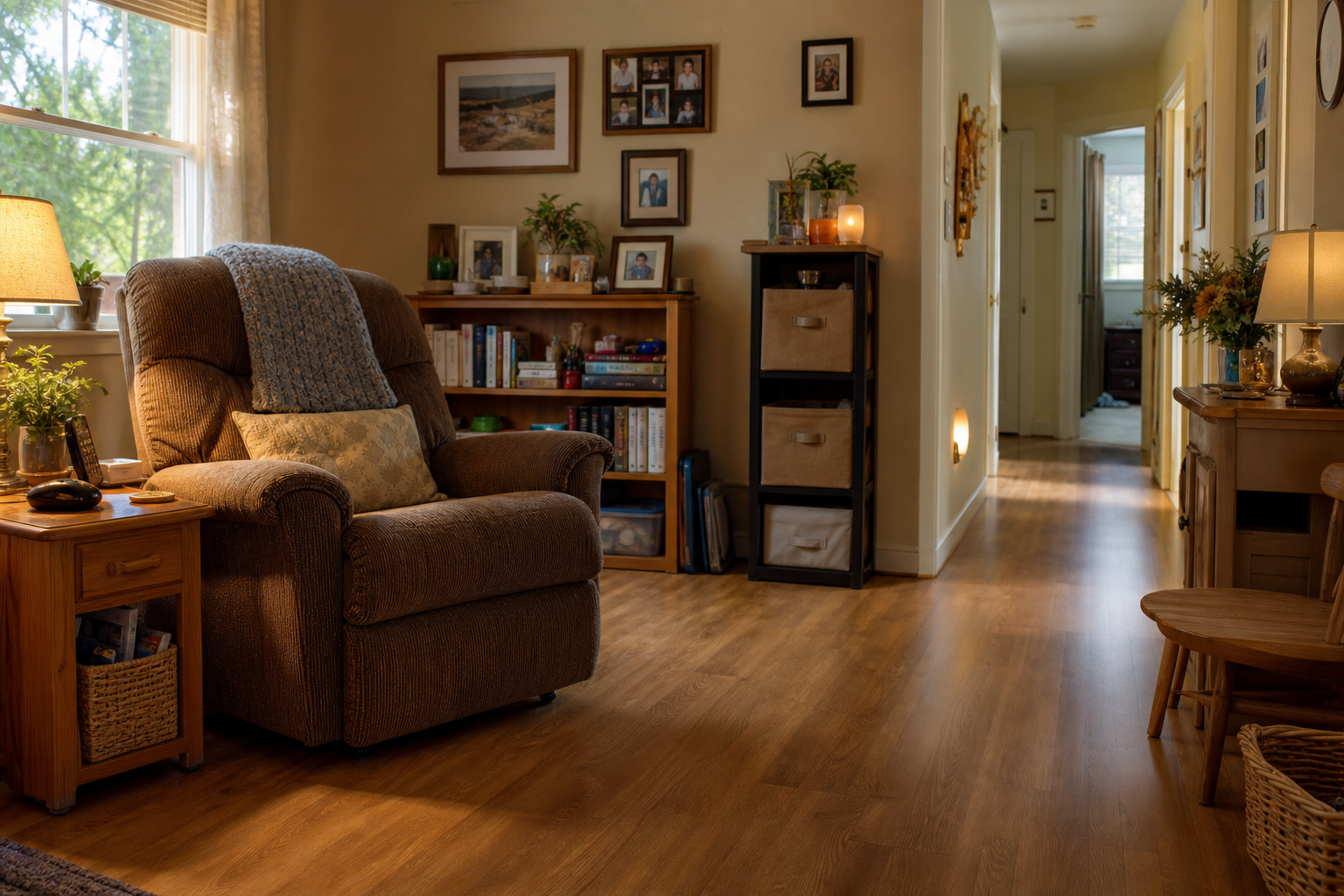
Aging In Place On A Budget means making the home safer and easier to live in without assuming a major remodel, expensive equipment, or constant paid help. The main risk is not usually one dramatic hazard. It is the slow buildup of small problems that make walking, reaching, bathing, cooking, and getting up at night harder than they need to be.
A loose rug, dim hallway, crowded bedroom path, low chair, cluttered counter, or poorly placed lamp can create real risk at home. The prevention mindset is simple: change the environment before a fall, strain, or daily frustration forces a bigger decision. Most useful aging-in-place improvements are practical, inexpensive, and based on how the person actually moves through the home.
The goal is not to create a perfect house. The goal is to make the existing home work better, one decision at a time.
Reduce Walking Hazards First When Aging In Place On A Budget
Start with the walking path because it affects nearly every daily activity.
Falls often begin with ordinary movement through familiar rooms. A person may step around a footstool, brush against a narrow table, catch a toe on a rug edge, or turn too quickly in a hallway. These hazards can stay unnoticed because everyone in the house has learned to work around them. That does not make them safe.
Aging In Place On A Budget works best when the first changes are free or nearly free. Clear the route from the bed to the bathroom, from the favorite chair to the kitchen, and from the entry door to the main living area. These routes matter more than decorative arrangements.
Useful first actions include:
- Remove small rugs from main walking paths.
- Move low tables away from chair-to-door routes.
- Coil or reroute electrical cords along walls.
- Clear shoes, baskets, and pet items from hallways.
- Keep frequently used doors able to open fully.
- Test each path while carrying a cup of water or a laundry basket.
This is not about making the home look empty. It is about making the safest route the easiest route.
Spend First On Items That Prevent Daily Strain
Small purchases should solve repeated daily problems.
The most useful low-cost items are not decorative. They reduce bending, reaching, twisting, stumbling, or rushing. A $10 night light can be more useful than an expensive piece of furniture. A stable chair with arms can matter more than a new cabinet. The right purchase is the one that removes a specific daily risk.
Aging In Place On A Budget should begin with the tasks that happen every day. Getting out of bed, using the bathroom, preparing food, taking medication, and moving through the house at night are high-priority routines. If one of those routines requires awkward movement, fix that first.
Good early purchases often include:
- Plug-in night lights for bedroom, hallway, and bathroom routes.
- Non-slip strips for steps or slick thresholds.
- A reacher tool for light objects on shelves.
- A shower mat with strong suction and visible contrast.
- A stable bedside lamp that can be reached before standing.
- A raised chair cushion if a favorite chair is too low.
Do not buy several products at once just because they are marketed for seniors. Watch the movement problem first, then choose the cheapest item that directly reduces that problem.
Make Floors Safer Before Buying More Equipment
Flooring problems can quietly turn a familiar home into a hazard.
The floor is the surface every plan depends on. If it is slippery, uneven, cluttered, or visually confusing, other safety changes become less reliable. Aging In Place On A Budget should include a careful walk-through of every surface where daily movement happens. Look especially at transitions between rooms, the edge of area rugs, curled mats, loose thresholds, and slick kitchen or bathroom flooring.
Some fixes cost nothing. Others are inexpensive. The key is to avoid adding equipment before correcting the underlying surface. A walker, cane, or grab bar cannot fully compensate for a floor that catches the foot or slides under pressure.
Practical floor actions include:
- Remove throw rugs from hallways and bathroom entrances.
- Tape or secure rug edges only if the rug truly needs to stay.
- Replace curled mats with flat, non-slip versions.
- Wipe kitchen spills immediately instead of waiting until cleanup time.
- Add contrast tape to hard-to-see thresholds.
- Keep pet bowls away from main walking routes.
Use Lighting To Make Movement More Predictable
Better lighting is one of the cheapest safety upgrades in the home.
Many falls happen because the person is moving before the eyes have adjusted. This is especially common at night, early in the morning, or in rooms where lamps are placed for appearance rather than function. Aging In Place On A Budget should treat lighting as a movement tool, not just a comfort feature.
The best lighting plan follows the body’s path. The person should be able to sit up, turn on a light, stand, walk, enter the bathroom, and return without crossing a dark area. Lamps should be reachable from a seated position. Switches should not require stepping into a dark room first.
Helpful lighting changes include:
- Place a lamp within arm’s reach of the bed.
- Use motion-sensor lights near the bathroom route.
- Add plug-in night lights at hallway outlets.
- Replace weak bulbs in stairways and entry areas.
- Keep a small flashlight in a consistent bedside location.
- Use brighter task lighting where medications are sorted.
Lighting does not need to be harsh. It needs to be predictable. The person should not have to guess where the floor, doorway, step, or the edge of furniture is.
Home Lighting Safety For Seniors
Rearrange Furniture Around Real Movement Patterns
Furniture should support the way the person actually moves.
A room can look pleasant and still be difficult to navigate. The problem is often not the amount of furniture but the placement. Small tables, ottomans, plant stands, magazine racks, and decorative pieces can create narrow turns or force sideways movement. Aging In Place On A Budget usually improves when furniture is arranged around walking lines instead of room symmetry.
Start with the favorite chair, bed, bathroom route, kitchen route, and front door. These are the movement anchors. A safe layout gives each anchor a clear approach, stable seating, and enough space to turn without bumping into sharp edges or low objects.
Specific furniture changes include:
- Move coffee tables farther from the main chair.
- Remove ottomans from routes used at night.
- Keep one stable table beside the favorite chair.
- Choose chairs with arms instead of soft, low seating.
- Place baskets and storage bins against walls, not in pathways.
- Leave turning space near beds, recliners, and doorways.
A messy but safe home is better than a staged room full of hazards. The goal is not showroom design. The goal is fewer awkward steps.
Control Bathroom Costs By Fixing The Highest-Risk Moves
Bathroom safety deserves priority because the room combines water, hard surfaces, tight turns, and transfers.
A full bathroom remodel is not the first step. Many useful changes are small, targeted, and inexpensive. The highest-risk movements are stepping into the tub or shower, turning on a wet floor, sitting down on the toilet, standing back up, and reaching for towels or clothing while off balance.
Aging In Place On A Budget should focus on those movements before cosmetic upgrades. A safer bathroom may still look ordinary. What matters is whether the person can enter, wash, dry, use the toilet, and exit without rushing, twisting, or reaching too far.
Useful bathroom actions include:
- Place towels within easy reach before bathing.
- Use a non-slip bath mat that lies flat.
- Keep soap and shampoo between the shoulder and waist height.
- Remove loose rugs near the toilet and shower.
- Add a shower chair if standing through bathing is tiring.
- Keep the floor dry after each use.
For general fall prevention guidance, MedlinePlus provides a useful overview at https://medlineplus.gov/ency/patientinstructions/000021.htm
Protect The Budget By Avoiding Bad Purchases
The wrong purchase can waste money and add clutter.
Aging In Place On A Budget is partly about knowing what not to buy. Many products sound useful but do not match the person, the house, or the actual risk. A bulky storage unit can narrow a hallway. A decorative bench can become a tripping hazard. A cheap grab bar with suction cups may create false confidence if it is used for real weight support.
Before buying anything, identify the exact movement problem. Is the person struggling to stand from a chair? Reaching too high? Walking in the dark? Turning in a tight bathroom? Carrying laundry down steps? Each problem needs a different answer. Buying general “senior safety” products without a specific use can make the home more crowded.
A simple buying rule helps:
- Do not buy it unless it solves a repeated problem.
- Measure the space before bringing in new furniture.
- Avoid products that block walking paths.
- Choose stable items over lightweight decorative ones.
- Test whether the person will actually use the item.
- Remove one hazard before adding a new object.
The Aging in Place Checklist connects these budget choices to the larger safety plan. Fall prevention is not one purchase. It is a series of small changes that make walking, reaching, turning, standing, and resting safer inside the same home.
Build A Practical Plan Before Problems Become Expensive
The cheapest safety improvement is often the one made early.
Waiting until a fall, injury, or crisis can make every option more expensive. Emergency changes tend to be rushed. Families may buy the wrong equipment, accept costly services, or make decisions under pressure. Aging In Place On A Budget works better when the home is adjusted gradually while there is still time to observe, compare, and prioritize.
A practical plan should begin with the rooms used most often. Do not try to fix the whole house in one weekend. Start with the bedroom, bathroom, kitchen, main seating area, and entryway. These areas carry most of the daily movement load. Then revisit the plan as mobility, stamina, vision, balance, or caregiving needs change.
A useful monthly routine includes:
- Walk through the home at the same time the person usually moves.
- Check whether new clutter has appeared in the main pathways.
- Watch whether the person avoids certain chairs, steps, or rooms.
- Move frequently used items to easier locations.
- Replace weak lighting before it becomes a daily problem.
- Remove unused furniture that narrows safe movement.
Prevention is not expensive when it becomes ordinary. A safer home is usually built through repeated small corrections, not one perfect project. The best budget plan keeps the person moving through familiar spaces with less strain, fewer surprises, and more control over daily routines.
_____________________________________________________________________________________________________
Get clear, practical insights on aging in place sent occasionally, and only when useful.
No spam. No noise. Unsubscribe anytime.
______________________________________________________________________________________________________