Senior Home Safety Checklist
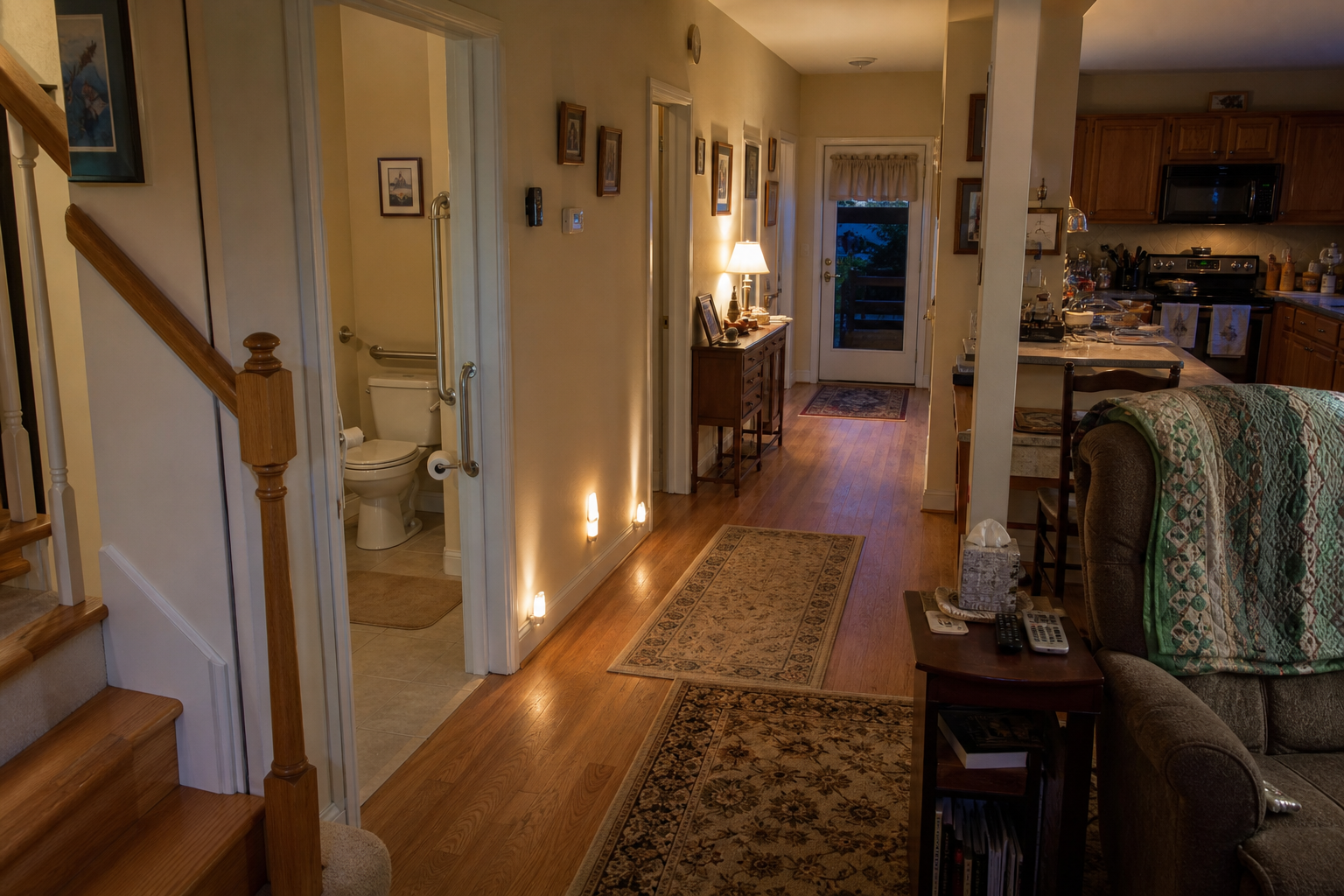
A Senior Home Safety Checklist helps identify the everyday hazards that often lead to falls, injuries, and loss of independence at home. Many safety problems develop slowly through poor lighting, cluttered walkways, unstable furniture, slippery floors, and difficult room layouts that become harder to navigate over time.
Small environmental problems can pose major risks when movement slows, balance changes, or nighttime visibility declines. Prevention usually works best when changes are practical, affordable, and focused on making daily movement easier instead of turning the home into a clinical environment. Simple adjustments often improve safety more effectively than expensive remodeling projects.
A safer home starts with observing how people actually move through rooms during ordinary activities such as bathing, cooking, carrying laundry, getting out of bed, or walking to the bathroom at night.
Senior Home Safety Checklist For Fall Prevention
A Senior Home Safety Checklist should begin with the highest-risk movement areas inside the home. Falls often occur during everyday transitions, such as standing up, turning corners, stepping over clutter, or moving through dimly lit pathways.
Start by walking through the home slowly and identifying areas where balance could be disrupted. Pay attention to changes in flooring, loose rugs, furniture placement, electrical cords, and narrow walking paths. Nighttime movement patterns deserve special attention because poor visibility significantly increases fall risk.
Important fall prevention checks include:
- Remove loose throw rugs that slide on hard flooring
- Keep walking paths clear of boxes, shoes, and small furniture
- Secure electrical cords against walls whenever possible
- Improve lighting in hallways and room transitions
- Install stable handrails on both sides of stairways
- Check that commonly used chairs are easy to enter and exit safely
Furniture should support stable movement rather than block it. Crowded rooms may look comfortable, but can force awkward turning movements that increase instability. Open pathways generally improve safety more than decorative arrangements.
Floor surfaces should also remain consistent between rooms whenever possible. Abrupt height changes between flooring materials can easily catch shoes or walkers.
Lighting And Visibility Throughout The Home
Lighting problems are one of the most overlooked home safety hazards. Many homes become difficult to navigate at night because important movement areas remain dim or unevenly lit.
A safer lighting setup does not require expensive upgrades. Simple changes often improve visibility dramatically. Hallways, stair landings, bathrooms, and bedroom pathways should remain easy to see without harsh glare or deep shadows.
Useful lighting improvements include:
- Add plug-in night lights near bathrooms and hallways
- Use brighter bulbs in stairways and entry areas
- Place lamps within easy reach of beds and chairs
- Improve visibility around light switches
- Keep flashlights in consistent locations
- Open curtains during daytime hours to improve natural light
Light placement matters as much as brightness. A bright bulb behind a chair may still leave walking areas in shadow. Focus on visibility where feet actually move.
Motion-sensor lighting can help in garages, outdoor walkways, and dark hallways without significantly increasing electricity use.
Home Lighting Safety For Seniors
Bathroom Movement And Transfer Safety
Bathrooms combine slippery surfaces, tight spaces, and difficult body movements. Stepping into tubs, lowering onto toilets, and turning on wet flooring creates one of the highest injury risks in the home.
Safe bathroom movement depends on stability and clear access rather than appearance. Many dangerous bathrooms simply contain too many obstacles packed into a small space.
Helpful bathroom safety improvements include:
- Install grab bars near toilets and bathing areas
- Use non-slip bath mats with secure backing
- Remove unstable towel bars used for support
- Keep toiletries within easy reach
- Improve lighting around sinks and shower entrances
- Use a stable shower chair if standing becomes difficult
Tub walls often become harder to step over safely. Walk-in showers or low-threshold entries can reduce risk substantially, but even inexpensive changes such as grab bars and better traction on flooring help immediately.
Toilet height also affects safety. Chairs and toilets that sit too low require difficult standing movements, increasing strain and instability.
Kitchen Safety And Daily Task Efficiency
The kitchen creates safety risks through reaching, carrying, bending, and standing on hard flooring for long periods. A safer kitchen layout reduces unnecessary movement and makes commonly used items easier to access.
Frequently used cookware, dishes, and food items should remain between waist and shoulder height whenever possible. Reaching overhead or bending repeatedly increases both fall risk and fatigue.
Practical kitchen safety adjustments include:
- Store heavy items on lower stable shelves
- Keep frequently used items near work areas
- Use non-slip mats carefully and secure edges firmly
- Improve lighting above counters and sinks
- Avoid step stools without stable hand support
- Keep paper towels and cleaning supplies within easy reach
Cluttered countertops also create hazards by limiting workspace and encouraging awkward body positioning. Simpler layouts usually improve movement safety.
Floor spills require immediate cleanup because kitchens often feature smooth flooring and rapid directional changes when carrying hot food or dishes.
Stairways, Entryways, And Walking Paths
Stairs and entry transitions require careful attention because they involve changes in elevation, balance adjustments, and turning movements. Even a few poorly designed steps can create a major risk of injury.
Handrails should feel stable and continuous from top to bottom. Loose railings provide false confidence and may fail when a person loses balance.
Safer stair and entryway conditions include:
- Keep steps completely free of stored objects
- Improve lighting at the top and bottom landings
- Add contrast strips on stair edges if visibility is poor
- Repair uneven outdoor walkways
- Remove slippery leaves and debris regularly
- Ensure railings remain easy to grip securely
Entryways should also provide enough space for stable movement while opening doors or carrying items. Narrow spaces crowded with shoes, furniture, or decorations create unnecessary obstacles.
Outdoor walking surfaces deserve regular inspection because cracked concrete, uneven pavers, and loose gravel frequently contribute to falls.
Flooring Conditions And Trip Hazard Reduction
A Senior Home Safety Checklist should closely evaluate flooring because nearly every movement inside the home depends on stable walking surfaces. Flooring affects nearly every movement inside the home. Slippery surfaces, uneven transitions, curled rugs, and unstable mats can quickly turn ordinary walking into a dangerous activity.
Many trip hazards develop gradually and stop attracting attention because residents become used to them. A fresh inspection often reveals overlooked problems.
Important flooring safety checks include:
- Secure area rugs with non-slip backing
- Repair curled carpet edges promptly
- Remove unstable floor mats near doors
- Keep pet toys away from walking paths
- Avoid waxy floor finishes that increase slipperiness
- Check transitions between flooring materials carefully
Hard flooring may improve walker movement in some homes, but excessively smooth surfaces can become slippery when wet. Balance between traction and mobility matters more than appearance.
Pet bowls, extension cords, and decorative items placed near pathways frequently create avoidable hazards. Walking routes should remain visually clear and physically open.
https://pmc.ncbi.nlm.nih.gov/articles/PMC5293217/
Bedroom Safety And Nighttime Movement
Bedrooms should support safe nighttime movement without requiring difficult reaching, twisting, or searching in darkness. Many falls happen during trips to the bathroom because people move too quickly through poorly lit spaces.
Bed height plays a major role in stability. Beds that sit too low create difficult standing movements, while excessively high beds increase slipping risk during transfers.
Useful bedroom safety adjustments include:
- Keep a lamp within immediate reach of the bed
- Maintain a clear path to the bathroom
- Secure rugs near the bedside area
- Store phones and medications nearby
- Avoid unstable chairs used for dressing
- Keep frequently worn shoes easy to access
Nighttime confusion and fatigue often worsen movement problems. Simple lighting improvements usually provide immediate safety benefits without major expense.
Homes designed for aging in place often work best when daily routines become easier instead of more complicated. Consistent room layouts, stable furniture placement, and clear pathways support safer movement patterns throughout the home. Many families can periodically use the Aging in Place Checklist because small environmental changes can gradually create new fall risks.
Maintaining A Safer Home Over Time
Home safety works best as an ongoing process instead of a one-time project. Small changes in mobility, vision, strength, or endurance can gradually affect how safely a person moves through familiar rooms.
Regular observation matters more than perfection. Watch for hesitation near stairs, difficulty standing from chairs, increased reliance on walls for balance, or clutter accumulating in pathways. These changes often appear long before serious injuries occur.
A practical safety routine may include:
- Rechecking lighting every few months
- Monitoring frequently used walking paths
- Rearranging furniture if movement patterns change
- Removing unnecessary household items gradually
- Reviewing emergency phone access regularly
- Checking flooring wear and loose edges routinely
A Senior Home Safety Checklist works best as an ongoing process instead of a one-time project. The safest homes usually feel functional, lived-in, and easy to navigate rather than perfectly designed. Affordable environmental adjustments often support independent living longer than expensive remodeling projects that ignore actual movement habits.
_____________________________________________________________________________________________________
Get clear, practical insights on aging in place sent occasionally, and only when useful.
No spam. No noise. Unsubscribe anytime.
______________________________________________________________________________________________________