Senior Home Safety Assessment
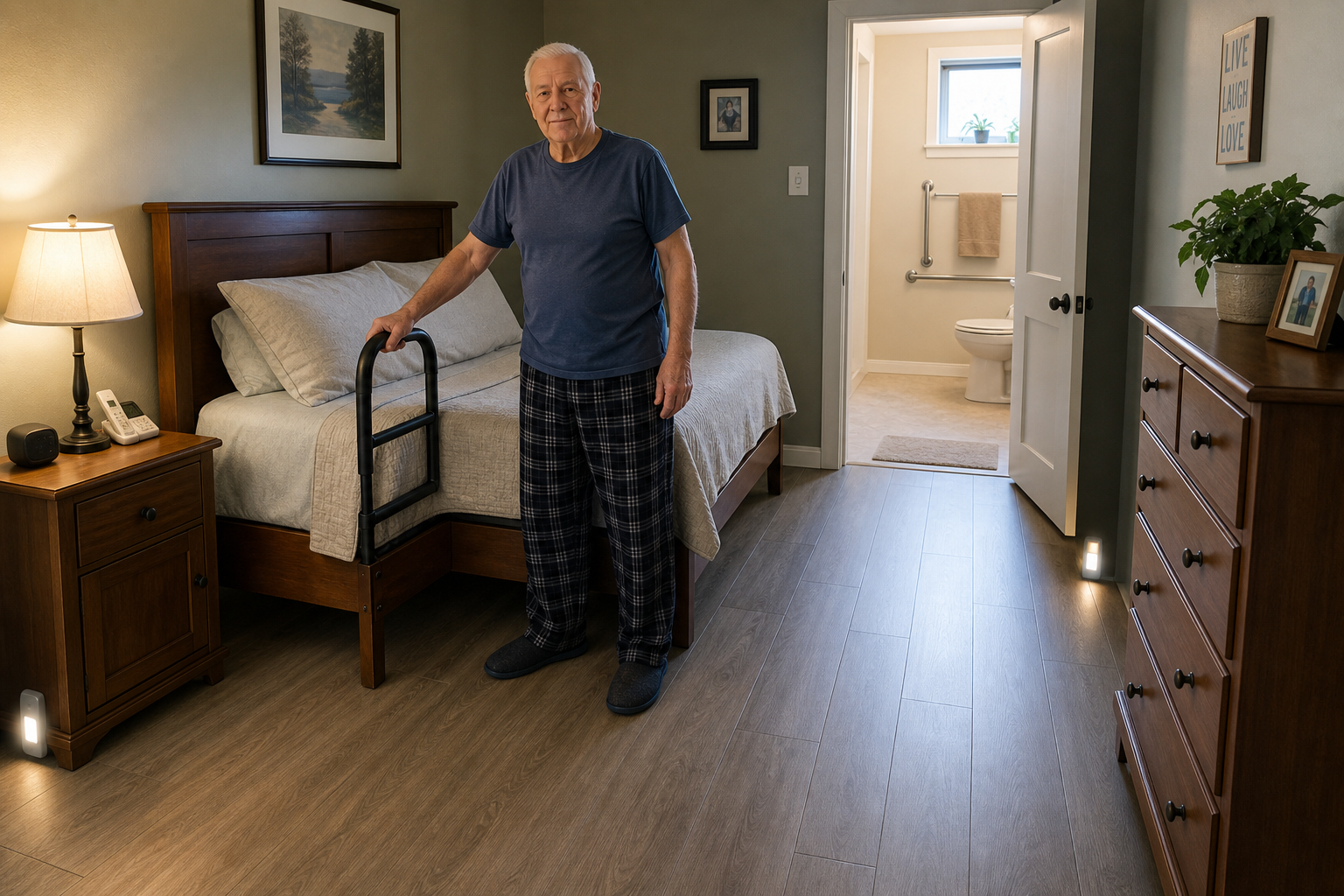
A senior home safety assessment is a structured evaluation of a living space to identify hazards, reduce fall risk, and support safe daily movement. This process focuses on real-world conditions such as flooring, lighting, furniture placement, and how a person actually moves through the home during the day and at night. The goal is not theory. It is prevention through practical adjustments.
The bedroom is one of the highest-risk areas in any home because it combines low lighting, transitions from lying to standing, and frequent nighttime movement. Many falls occur when getting out of bed, walking to the bathroom, or navigating around furniture in the dark. A prevention mindset focuses on eliminating friction points before they become incidents.
A well-executed assessment looks at how the environment supports or interferes with safe movement. Every adjustment should reduce effort, improve visibility, and create predictable pathways.Bedroom Safety For Seniors Starts With Bed Height And Stability
The bed is the starting point of every nighttime movement, and its setup directly affects balance and fall risk. A senior home safety assessment always begins here because improper bed height or instability can create immediate danger during transfers.
A bed that is too low requires excessive effort to stand. A bed that is too high increases the risk of sliding or misjudging footing. Stability matters just as much as height, especially for individuals who shift weight slowly.
Practical adjustments include:
• Adjust the bed so the feet rest flat on the floor when seated on the edge
• Install bed risers only if they are locked and evenly placed
• Remove rolling frames unless wheels can be securely locked
• Add a bed rail or assist handle for controlled transfers
• Ensure the mattress does not slide on the frame
• Position the bed so one side has a clear exit path
These changes reduce instability at the most vulnerable moment, which is the transition from lying down to standing.
Lighting Placement For Nighttime Visibility
Lighting determines whether movement is confident or uncertain. A senior home safety assessment prioritizes layered lighting to eliminate dark zones that force guesswork at night.
Overhead lights are not enough because they are rarely used at night. Instead, low-level lighting should guide movement from the bed to key destinations like the bathroom.
Effective lighting strategies include:
• Install motion-activated night lights along the floor path
• Place a bedside lamp within arm’s reach
• Use warm, low-glare bulbs to reduce visual shock
• Add lighting inside closets to prevent reaching in darkness
• Ensure light switches are accessible from the bed
• Use plug-in lights in outlets near the floor
Lighting should create a continuous, visible path rather than isolated points of brightness.
Floor Hazards And Surface Stability
Flooring is one of the most overlooked risk factors, yet it plays a central role in a senior home safety assessment. Uneven surfaces, loose materials, and clutter disrupt balance and increase the chance of tripping.
The goal is to create a predictable, stable walking surface throughout the bedroom.
Key actions include:
• Remove all loose throw rugs or secure them with non-slip backing
• Eliminate cords crossing walking paths
• Repair uneven flooring or transitions between materials
• Keep pathways completely clear of objects
• Avoid highly polished surfaces that become slippery
• Ensure carpet edges are secured and not curling
Consistency underfoot allows the body to move without hesitation, especially during low-light conditions.
How to prevent falls in the home
Furniture Layout And Walking Path Design
Furniture placement determines how easily someone can move through the room. A senior home safety assessment evaluates whether the layout supports direct, unobstructed movement.
Crowded rooms make navigation awkward, especially when turning or carrying items. The objective is to simplify movement patterns.
Adjustments to consider:
• Create a straight, wide path from bed to door
• Remove unnecessary furniture that narrows walkways
• Avoid sharp corners near walking paths
• Position essential items within easy reach
• Ensure chairs and surfaces are stable for support
• Keep frequently used items at waist height
A clear layout reduces decision-making while moving, which is critical at night or when fatigued.
Transfer Safety And Body Mechanics
Transfers are high-risk moments that require controlled movement and proper support. A senior home safety assessment evaluates how easily a person can move from bed to standing and from standing to walking.
The focus is on reducing strain and improving leverage.
Important actions include:
• Place sturdy surfaces near the bed for support
• Avoid soft furniture that collapses under weight
• Use assistive devices when needed
• Ensure proper footwear is worn before standing
• Sit briefly before standing to stabilize balance
• Avoid twisting motions during transfers
These adjustments support safe movement by aligning the environment with natural body mechanics.
A Senior Home Safety Assessment Needs Bathroom Pathway Optimization
The path from the bedroom to the bathroom is one of the most critical routes in the home. A senior home safety assessment ensures this pathway is safe, visible, and unobstructed.
Nighttime urgency often leads to rushed movement, increasing the risk of falls.
Key improvements include:
• Install continuous lighting along the pathway
• Remove all obstacles between the bed and the bathroom
• Ensure doorways are fully open and easy to access
• Add non-slip surfaces at entry points
• Keep floors dry and free of hazards
• Use contrasting colors to define edges and thresholds
This pathway should feel automatic and effortless to navigate.
https://medlineplus.gov/ency/patientinstructions/000021.htm
Nighttime Behavior And Risk Reduction
Behavior patterns influence safety just as much as the environment. A senior home safety assessment considers how habits interact with physical surroundings, especially during the night.
Rushed or unplanned movement increases risk, even in a well-designed space.
Behavior-focused adjustments include:
• Sit at the edge of the bed before standing
• Turn on the lighting before taking a step
• Wear non-slip footwear when walking
• Avoid carrying items while moving at night
• Keep essential items within arm’s reach
• Use assistive devices consistently
These actions reinforce safe movement patterns and reduce impulsive decisions.
Consistency And Routine-Based Safety
Safety improves when the environment and behavior remain consistent. A senior home safety assessment aims to create predictable conditions that support routine movement.
Changes in layout or habits can introduce confusion and increase risk.
To maintain consistency:
• Keep furniture in fixed positions
• Use the same lighting setup every night
• Store items in consistent locations
• Avoid introducing new obstacles
• Reinforce safe movement habits daily
• Review the environment regularly for changes
Consistency reduces cognitive load and supports automatic, safe movement.
_____________________________________________________________________________________________________
Get clear, practical insights on aging in place sent occasionally, and only when useful.
No spam. No noise. Unsubscribe anytime.
______________________________________________________________________________________________________