Cane Safety For Seniors
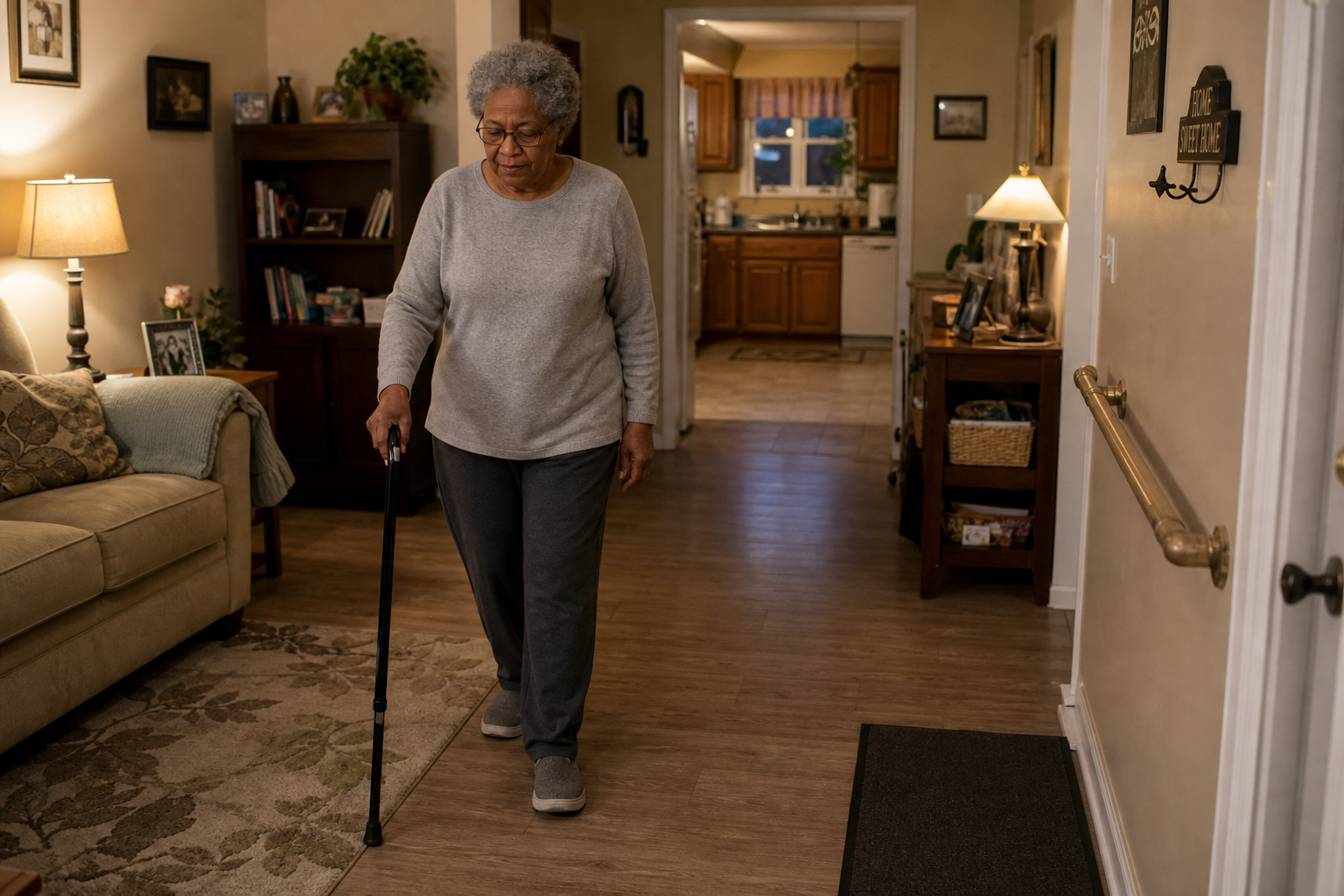
Cane use can improve stability, confidence, and mobility, but improper use often creates new fall hazards inside the home. Cane Safety For Seniors begins with understanding how poor cane height, worn rubber tips, rushed movement, and cluttered walking paths increase the risk of trips and loss of balance.
Many falls happen during ordinary daily movement rather than dramatic accidents. Walking from the bedroom to the bathroom at night, carrying small items while using a cane, or turning too quickly around furniture can create dangerous situations. Prevention starts with slowing movement, improving household layout, and using mobility equipment correctly.
A practical approach to safer movement supports long-term independence and helps older adults remain comfortable at home without unnecessary complications or expensive interventions.
Cane Safety For Seniors Starts With Proper Cane Fit And Grip
A cane should support balance without forcing awkward posture or uneven movement. A cane that is too short can pull the body forward and strain the back, while a cane that is too tall may lift the shoulder and reduce control during walking. Proper hand placement and grip strength also affect stability during daily movement.
When standing upright with relaxed shoulders, the cane handle should generally align near wrist level. The elbow should bend slightly during use rather than locking straight. The user should feel stable rather than leaning heavily on the cane with each step.
Important physical adjustments include:
• Replace cracked or hardened rubber tips before they lose traction
• Tighten loose folding mechanisms or adjustable sections immediately
• Keep the wrist neutral instead of bending sharply downward on the handle
• Avoid carrying bags in the same hand that controls the cane
• Use slow, controlled steps during direction changes
Many people continue using worn canes long after the grip becomes unstable. A cane should feel predictable on tile, carpet, and outdoor surfaces. Testing movement carefully in different parts of the home helps identify unsafe patterns before a fall occurs.
Walking Paths Should Remain Wide And Predictable
Clear walking routes reduce the need for sudden adjustments and awkward side-stepping. Cane Safety For Seniors improves significantly when the home layout allows smooth movement between major living areas. Tight pathways often force the cane into furniture legs, floor transitions, and unstable surfaces.
Hallways and bedroom entrances deserve special attention because nighttime movement often occurs when people are tired or distracted. Narrow routes also increase the risk of the cane tip catching on rugs or electrical cords.
Useful home adjustments include:
• Remove decorative stools or small tables from narrow walkways
• Secure loose electrical cords against walls
• Keep pet bowls away from common walking routes
• Store shoes away from doorways and bed edges
• Rearrange furniture to create straight walking lines through rooms
• Maintain consistent floor surfaces whenever possible
Walking paths should also allow enough room for turning without twisting sharply. Wide, open movement patterns reduce stress on knees, hips, and shoulders during daily activity.
Flooring Conditions Affect Cane Stability Every Day
Floor surfaces directly affect balance because the cane tip must maintain consistent traction during movement. Thick rugs, curled carpet edges, glossy tile, and uneven flooring all increase instability. Many falls occur because the cane tip slides unexpectedly during weight transfer.
Some flooring materials create problems only under certain conditions. Smooth tile becomes more dangerous after mopping, while soft carpet may catch the cane tip and interrupt walking rhythm. Paying attention to flooring changes throughout the home helps reduce sudden movement errors.
Helpful flooring improvements include:
• Remove lightweight throw rugs from walking areas
• Repair lifted flooring seams near doorways
• Use non-slip backing beneath essential area rugs
• Dry wet floors immediately after spills or cleaning
• Avoid highly polished floor coatings that reduce traction
Cane users should also practice walking slowly across floor transitions between carpet and hard surfaces. Uneven timing of movement often causes stumbling during these changes.
Proper Lighting Helps Prevent Missteps And Sudden Balance Loss
Low lighting makes it difficult to judge distances, identify obstacles, and place the cane accurately. Cane Safety For Seniors relies heavily on visual awareness, as small hazards are much harder to detect in dim conditions. Poor lighting is especially dangerous during nighttime bathroom trips and early morning movement.
Lighting should illuminate both the floor and the surrounding furniture edges rather than creating strong glare. Bright overhead lighting alone may leave shadows near beds, chairs, and hallway corners.
Effective lighting improvements include:
• Install night lights between the bedroom and bathroom
• Place light switches near room entrances
• Use bright bulbs in hallways and stair landings
• Add bedside lamps that are easy to reach
• Keep lamp cords secured against walls or behind furniture
• Replace burned-out bulbs immediately
Motion-activated lighting can also reduce the need to search for switches while holding a cane. Reliable visibility supports safer foot placement and more stable movement patterns.
Safe Transfers Reduce The Risk Of Falling During Everyday Movement
Standing up and sitting down place significant stress on balance and coordination. Many older adults feel stable while walking but become unsteady during transfers between beds, chairs, and toilets. Cane Safety For Seniors should include careful attention to these movement transitions.
Chairs that are too low force the knees and hips into difficult positions. Soft furniture may also shift unexpectedly while standing. Stable seating surfaces make controlled transfers easier and safer.
Important transfer habits include:
• Push upward from chair arms instead of pulling on the cane
• Pause briefly after standing before beginning to walk
• Position the cane securely before shifting weight forward
• Avoid twisting while rising from beds or recliners
• Keep frequently used chairs on stable, level flooring
Transfer safety also depends on organization. Remote controls, glasses, medications, and water should remain within easy reach to minimize unnecessary leaning and stretching.
Outdoor Surfaces Require Different Cane Techniques
Outdoor movement introduces additional hazards because sidewalks, driveways, and parking lots rarely provide even traction. Cane users often move too quickly outdoors because they feel pressure from traffic, weather, or crowded public spaces.
Rainwater, gravel, grass, cracked pavement, and sloped surfaces all affect stability differently. Outdoor cane use requires slower pacing and more deliberate foot placement than indoor movement.
Practical outdoor safety measures include:
• Test wet pavement carefully before shifting full weight
• Avoid steep grassy areas whenever possible
• Watch for sidewalk height changes near curbs
• Use railings during ramp or stair navigation
• Wear shoes with stable non-slip soles
• Pause before stepping across uneven pavement
Weather conditions also matter. Damp leaves, loose gravel, and standing water increase the risk of slipping even when using a cane correctly.
https://pmc.ncbi.nlm.nih.gov/articles/PMC6464113/
Daily Habits Influence Long-Term Mobility And Stability
Small daily routines often determine whether balance improves or gradually worsens over time. Cane Safety For Seniors becomes more effective when movement remains intentional rather than rushed. Consistent habits help older adults recognize unsafe patterns before a serious fall occurs.
Many people develop risky shortcuts inside familiar environments. Walking without turning on lights, carrying laundry while using a cane, or rushing to answer the phone can quickly create unstable conditions.
Safer daily movement habits include:
• Stand still briefly before changing direction
• Keep one hand free during walking whenever possible
• Avoid multitasking while moving through the home
• Wear supportive shoes instead of slippery socks
• Maintain predictable furniture placement throughout the house
• Keep commonly used items at waist height for easier access
System Context: This page supports the site's broader fall-prevention and aging-in-place structure by focusing on safer daily movement, mobility awareness, and practical household adjustments that help older adults remain independent at home.
Aging in Place Checklist
Prevention Strategies Work Best When The Entire Home Supports Safe Movement
Fall prevention becomes much easier when every part of the home supports steady walking and controlled movement. A safer environment reduces physical strain and lowers the need for sudden balance corrections during ordinary activities.
Consistency matters throughout the house. A well-lit hallway loses value if the bedroom floor remains cluttered. Stable furniture placement becomes less effective if outdoor entryways remain slippery or uneven. Safe movement depends on combining multiple small improvements into one coordinated environment.
Long-term prevention strategies include:
• Reassess cane condition every few months for wear and stability
• Review room layouts after purchasing new furniture
• Keep emergency phone access within easy reach
• Reduce clutter accumulation around entrances and pathways
• Monitor floor traction changes after cleaning products are used
• Practice slower movement during fatigue or poor weather conditions
The goal is not perfect mobility. The goal is to create conditions that support safer, more controlled daily movement while preserving independence inside the home.
_____________________________________________________________________________________________________
Get clear, practical insights on aging in place sent occasionally, and only when useful.
No spam. No noise. Unsubscribe anytime.
______________________________________________________________________________________________________