Signs An Older Adult Should Not Live Alone
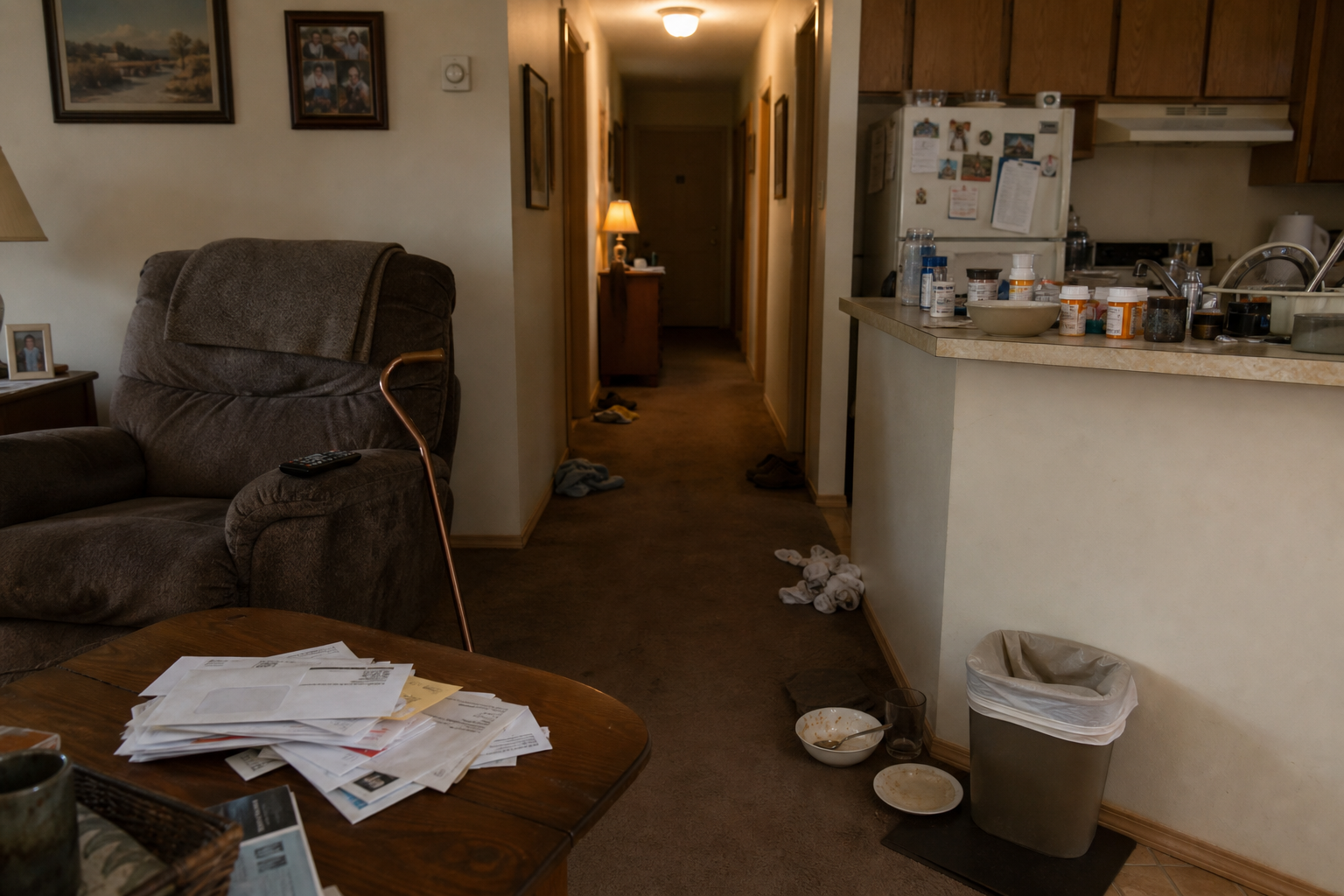
Signs an older adult should not live alone are often physical, visible, and practical before they become severe. The issue is not whether an older person values independence. The issue is whether the home, daily routines, and support system still match the person’s actual ability to move safely, eat regularly, manage basic tasks, and respond to problems.
Living alone can work well for many older adults when the home is simple, safe, and organized. It becomes risky when small problems stack up: poor lighting, missed meals, cluttered pathways, unsafe stairs, forgotten medication, or trouble getting up from a chair. The goal is prevention, not panic. Many problems can be reduced with inexpensive changes, better routines, and honest family observation.
This page focuses on practical warning signs families can see inside the home. It is written for adult children, spouses, relatives, and older adults who want to preserve independence as long as reasonably possible.
Signs An Older Adult Should Not Live Alone When Movement Around The Home Becomes Unsafe
Unsafe movement is often the first serious warning sign.
A person may still speak clearly, make decisions, and want privacy, but the body may no longer move safely through the home. Watch how the person gets out of bed, rises from a chair, turns in a hallway, steps over thresholds, and walks to the bathroom. These ordinary movements reveal more than a casual conversation.
Signs an older adult should not live alone may include repeated stumbling, grabbing furniture for balance, avoiding certain rooms, or moving very slowly because every step feels uncertain. The concern is not one awkward moment. The concern is a pattern that makes daily movement risky.
Look for specific movement problems:
• Move loose rugs away from walking paths and see whether walking improves.
• Place a sturdy chair near the entryway so shoes can be changed safely.
• Clear the path between the bedroom and bathroom before nighttime.
• Add brighter bulbs to hallways, stairs, and frequently used rooms.
• Watch whether the person can stand from a favorite chair without rocking or pulling on unstable furniture.
• Check whether the person avoids stairs, laundry areas, or outdoor steps.
When basic movement inside the home requires constant improvising, living alone may no longer be safe without changes or added support.
Missed Meals, Poor Food Storage, And Kitchen Problems Are Warning Signs
Food habits show whether daily routines are still working.
A nearly empty refrigerator, spoiled food, burned pans, unopened meal deliveries, or repeated reliance on snacks can indicate that living alone is becoming harder. The problem may be fatigue, poor balance, reduced grip strength, forgetfulness, poor vision, or difficulty standing long enough to prepare food.
Signs An Older Adult Should Not Live Alone often appear in the kitchen before they appear anywhere else. The kitchen requires walking, reaching, lifting, remembering, timing, and cleanup. When several of those tasks become difficult, nutrition and fire safety can both decline.
Practical checks include:
• Move daily dishes, pans, and food items to waist-height shelves.
• Remove heavy cookware that is difficult to lift safely.
• Place a large-print reminder near the stove to turn burners off.
• Check the refrigerator weekly for spoiled food and expired leftovers.
• Keep simple, ready-to-eat meals in easy reach.
• Replace unstable step stools with safer storage placement.
Medication Confusion Can Make Living Alone Riskier
Medication problems are one of the clearest signs that daily self-management may be breaking down.
Look for pills left loose on counters, duplicate bottles, missed doses, expired prescriptions, or uncertainty about what has already been taken. These problems do not always mean a person needs institutional care. They do mean the current routine may be too fragile.
Signs An Older Adult Should Not Live Alone can include taking pills at the wrong time, forgetting refills, mixing old and new prescriptions, or relying on memory alone. A safer routine should be visible, simple, and repeatable.
Helpful actions include:
• Use one clearly labeled weekly pill organizer.
• Keep all current medications in one fixed location.
• Remove expired or discontinued bottles from daily reach.
• Set a simple phone alarm for daily medication times.
• Write refill dates on a visible calendar.
• Ask one trusted person to check the system weekly.
Medication Management For Seniors
Falls, Near Falls, And Unexplained Bruises Need Serious Attention
A fall does not have to cause a major injury to matter.
Near falls are often warnings. If an older adult says they “almost went down,” “caught themselves,” or “just bumped into something,” take that seriously. Bruises on the arms, hips, knees, or shoulders may indicate that the person is hitting furniture, door frames, counters, or walls while trying to stay upright.
Signs an older adult should not live alone become more urgent when falls occur in private and are discovered later. A person who falls alone may not be able to reach a phone, unlock a door, or call for help quickly.
Reduce immediate risks first:
• Remove cords from walking paths.
• Place a phone or alert device near the bed and favorite chair.
• Add non-slip strips to stairs and entry steps.
• Keep a lamp within reach before getting out of bed.
• Move low tables away from tight walking spaces.
• Install grab bars where the person already reaches for walls or towel racks.
Trouble With Bathing, Dressing, And Toileting Shows Daily Strain
Personal care problems are practical warning signs, not moral failures.
An older adult may wear the same clothes repeatedly, avoid bathing, struggle with buttons, skip grooming, or delay toileting because the bathroom feels difficult to use. These signs can stem from balance issues, pain, fatigue, poor lighting, fear of falling, or a bathroom layout that no longer meets the person’s needs.
Signs an older adult should not live alone may include strong body odor, towels that never dry, piles of laundry, unsafe tub transfers, or reluctance to discuss bathroom routines. Families should handle this carefully and respectfully. The goal is to make necessary tasks easier, not embarrass the person.
Useful changes include:
• Add a non-slip bath mat inside and outside the tub or shower.
• Place frequently used clothing at easy reach.
• Use a shower chair if standing has become tiring.
• Replace low toilet seating with a safer height option.
• Keep clean towels within reach without bending or climbing.
• Improve bathroom lighting for nighttime use.
Unsafe Driving, Wandering, Or Getting Lost Can Change The Decision
Outside-the-home behavior matters too.
Living alone depends partly on whether the person can leave and return safely. Warning signs include getting lost on familiar routes, driving over curbs, new dents on the car, confusion in parking lots, trouble crossing streets, or walking outside without a clear purpose or preparation.
When these problems appear, the risk is no longer limited to the house. The person may become stranded, injured, confused, or unable to explain where they are. The response should be practical and specific. Reduce exposure to unsafe situations while preserving reasonable independence.
Possible steps include:
• Remove unnecessary night driving from the routine.
• Arrange grocery delivery or family shopping trips.
• Place address and emergency contact information in a wallet.
• Keep outdoor paths well-lit and free of obstacles.
• Use a simple written schedule for appointments and errands.
• Store keys in one consistent place to reduce confusion.
MedlinePlus has a useful overview of hazard reduction.
https://medlineplus.gov/ency/patientinstructions/000955.htm
Household Neglect Can Reveal More Than Messiness
A lived-in home does not need to look perfect.
The issue is whether the home still supports safe daily living. A messy but safe home is very different from a home where clutter blocks movement, spoiled food is ignored, mail piles hide bills, laundry creates tripping hazards, or trash attracts pests.
Signs an older adult should not live alone may include unpaid bills, broken appliances, blocked exits, dirty dishes left for days, or important items lost in clutter. These signs can indicate that the demands of living alone have become too much.
Look at the home by function:
• Clear one reliable walking path through each frequently used room.
• Move laundry baskets away from stairs and hallways.
• Place trash bags where they can be lifted without strain.
• Keep bills and important mail in one visible tray.
• Remove broken furniture that narrows pathways.
• Set up one easy weekly cleaning routine instead of occasional major cleanup.
The Best Next Step Is To Match Support To The Actual Risk
The decision should be based on observable risk, not fear.
A person may not need to move out just because one problem appears. The better first step is to identify what is failing. Is the danger movement, meals, medication, bathing, driving, clutter, nighttime bathroom trips, or emergency response? Once the actual weak point is clear, the support can be practical and affordable.
For some households, the answer may be better lighting, grab bars, meal delivery, a pill organizer, safer furniture placement, or scheduled family check-ins. For others, living alone may no longer be realistic without daily support. The key is to stop guessing and start matching the home to the person’s real abilities.
This topic connects directly to aging in place and fall prevention because living alone is safest when the home reduces unnecessary risk. The Aging in Place Checklist helps organize these decisions across rooms, routines, and daily movement patterns. This page fits within the larger site structure by helping families decide when independence needs stronger safeguards.
Start with visible changes:
• Walk the home at the same time of day the person usually moves through it.
• Check the bedroom-to-bathroom path in low light.
• Watch one chair transfer without assisting unless safety requires it.
• Review food, medication, laundry, and trash routines.
• Fix the easiest hazards first before assuming a major move is needed.
• Recheck the same risks after changes are made.
_____________________________________________________________________________________________________
Get clear, practical insights on aging in place sent occasionally, and only when useful.
No spam. No noise. Unsubscribe anytime.
______________________________________________________________________________________________________