Entryway Safety For Seniors
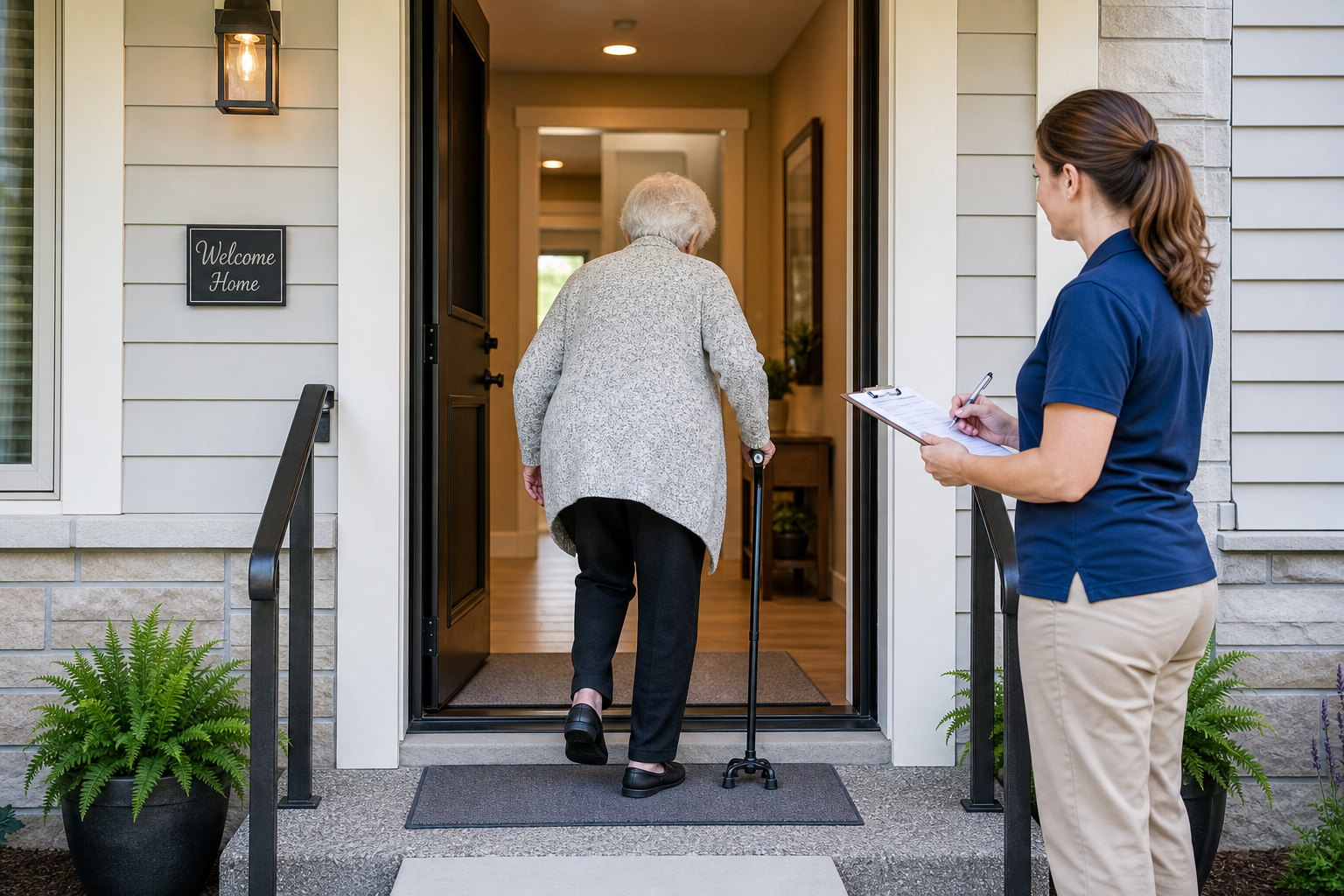
The entrance to a home is one of the most overlooked fall-risk areas. Entryway Safety For Seniors becomes increasingly important because uneven surfaces, poor lighting, clutter, weather exposure, and unstable steps can quickly create dangerous conditions for older adults entering or leaving the home.
Many falls occur during everyday activities such as carrying groceries, stepping over thresholds, unlocking doors, or using mobility devices near narrow entrances. Prevention starts by viewing the entryway as an active transition zone rather than a passive part of the home.
Small adjustments to lighting, flooring, hand support, visibility, and organization can significantly improve safety while helping older adults maintain independence and confidence during everyday movement.
Entryway Safety For Seniors Starts With Stable Walking Surfaces
Safe movement begins with a secure footing. The most common hazards in entryways include loose rugs, uneven concrete, cracked steps, slippery tile, and worn transition strips between flooring surfaces. These issues may appear minor, but they become more dangerous when balance, vision, or reaction time changes with age.
The first priority is to create a predictable walking path from the exterior approach to the interior doorway. Every surface should feel stable underfoot and remain consistent in height and texture.
Important improvements include:
- Replace loose rugs with low-profile slip-resistant mats
- Repair cracked concrete or uneven brick walkways
- Secure transition strips between flooring surfaces
- Remove curled carpet edges near doorways
- Install textured nonslip material on exterior steps
- Keep shoes and packages away from walking paths
Thresholds deserve particular attention because they often create subtle tripping points. Even a small height difference can interfere with walkers, canes, or reduced foot clearance during walking.
Older adults should also test walking surfaces in wet weather, as surfaces that feel safe when dry may become hazardous after rain or high humidity.
Improve Lighting Around Doors And Exterior Approaches
Poor lighting contributes significantly to falls near entrances because the eyes require more time to adjust from outdoor brightness to indoor lighting. Shadows, glare, and dim bulbs can make steps and obstacles difficult to detect.
Lighting should support movement from the driveway, sidewalk, porch, and doorway through the interior entrance area without sudden dark zones.
Effective lighting upgrades include:
- Install bright LED lighting near all entrances
- Add motion-activated exterior lights
- Illuminate stair edges and porch transitions
- Replace yellowed or dim light fixtures
- Position switches within easy reach of the door
- Reduce glare from exposed bulbs or reflective flooring
Lighting should remain functional during early morning hours, at night, and in poor weather conditions. Seniors should not need to search for switches while standing on stairs or carrying items.
Battery-powered backup lighting can also improve entryway safety for seniors during storms or power outages, especially in regions with frequent severe weather.
Reduce Clutter And Improve Entryway Safety For Seniors
Entryways often become collection points for shoes, umbrellas, packages, bags, pet supplies, and seasonal decorations. Clutter narrows walking space and increases the chance of tripping during routine movement.
Clear organization becomes especially important when mobility aids are involved. Walkers and canes require wider turning areas and unobstructed flooring.
Simple organizational strategies can improve safety substantially:
- Store shoes on shelves instead of the floor
- Use wall hooks for coats and bags
- Keep cords and charging cables away from pathways
- Remove decorative items from narrow walking areas
- Use small benches with stable seating surfaces
- Store frequently used items at waist height
Furniture placement matters as well. Narrow tables or decorative stands near entrances may create hip-level collision hazards, especially in dim lighting.
The safest entryways prioritize open movement space over decoration. Seniors should be able to enter, close the door, and move safely without having to step around obstacles.
How to Prevent Falls in the Home
Install Secure Handrails And Support Features
Support structures near entryways help compensate for changes in balance, arthritis, weakness, or temporary instability caused by weather conditions. Many homes lack sufficient support at critical transition points.
Handrails should feel stable, easy to grip, and properly positioned for natural movement patterns. Decorative rails that wobble or sit too far from walking paths provide little practical protection.
Helpful support upgrades include:
- Install graspable handrails on both sides of the steps
- Use textured rail surfaces for a secure grip
- Ensure railings extend beyond the final step
- Add support bars near interior step-down areas
- Replace loose porch railings immediately
- Install support features at garage entry transitions
Door hardware also matters. Lever-style handles are generally easier for seniors with arthritis or reduced hand strength compared to traditional round knobs.
Entry doors should open smoothly without requiring excessive pulling force. Heavy storm doors can become dangerous when combined with balance limitations or mobility aids.
Manage Weather Hazards Near The Entrance
Rain, leaves, humidity, mud, and seasonal debris create changing hazards around entrances throughout the year. Entryways that feel safe in dry conditions may become slippery and unstable during storms or colder weather.
Weather management requires regular observation rather than occasional cleanup. High-risk areas include porch steps, ramps, garage entrances, and shaded walkways where moisture lingers.
Important maintenance tasks include:
- Remove wet leaves from walkways promptly
- Use absorbent nonslip mats near entrances
- Check for standing water after rain
- Clear moss or algae from shaded surfaces
- Keep drainage areas flowing properly
- Store snow or ice supplies near the entrance when needed
Wet shoes also increase the risk of interior slip. Entry mats should absorb moisture effectively without creating curled edges or unstable surfaces.
Families should pay attention to footwear as well. Shoes with smooth or worn soles significantly increase the risk of slipping near entryways.
Keep Emergency Access Safe And Functional
Emergency situations often reveal weaknesses in entryway safety for seniors design. Seniors may need to leave the home quickly during storms, fires, medical emergencies, or power outages. Emergency responders also need clear access into the home.
Doorways should remain easy to unlock and navigate under stress. Complicated locks, blocked exits, or poorly lit entrances slow movement and increase confusion during urgent situations.
Emergency preparedness improvements include:
- Keep house numbers clearly visible from the street
- Ensure pathways remain unobstructed
- Test exterior lighting regularly
- Store emergency flashlights near the entrance
- Avoid placing furniture near escape routes
- Confirm that locks can be operated quickly from inside
Homes with ramps should also verify that ramp surfaces remain slip-resistant and structurally secure throughout the year.
Additional guidance on reducing household fall hazards is available through the MedlinePlus home safety resource: https://medlineplus.gov/ency/patientinstructions/000924.htm
Improve Safety For Mobility Devices And Daily Carrying Tasks
Entryways become more difficult when seniors use walkers, canes, or wheelchairs, or when they carry everyday items into the home. Narrow clearances, sharp turns, and unstable flooring can impede movement and increase the risk of falls.
Movement should remain smooth from the exterior approach into the main living area without abrupt changes in height or surface texture.
Practical mobility improvements include:
- Widen narrow pathways near the entrance
- Remove decorative items from turning areas
- Use ramps with gradual slopes when needed
- Install automatic or easier-to-open door hardware
- Keep frequently used items near entry height
- Ensure walkers fit comfortably through doorways
Package handling deserves attention as well. Carrying groceries or deliveries can temporarily block visibility and reduce balance stability. Seniors should avoid carrying large loads that interfere with safe movement.
System Context: Safe entryways support long-term independence by reducing preventable falls during routine movement in and out of the home. This page is part of the broader safety framework used throughout AgingInPlaceResource.com to help families identify practical risks before injuries occur. The larger planning structure can be explored through the Aging in Place Checklist.
Create A Long-Term Entryway Safety Maintenance Routine
Entryway safety is not a one-time project. Conditions change gradually as flooring wears down, lighting weakens, clutter accumulates, or mobility needs evolve. Ongoing observation helps identify hazards before they contribute to injuries.
Families should periodically walk through the entrance area while intentionally looking for instability, visual confusion, or movement barriers. Conditions that feel manageable at age sixty-five may become much more difficult ten years later.
A useful maintenance routine includes:
- Check railings monthly for looseness
- Replace burned-out bulbs immediately
- Inspect mats for curling or movement
- Reevaluate lighting during nighttime hours
- Remove clutter from entry pathways weekly
- Watch for seasonal moisture or debris buildup
It is also important to observe how seniors actually move through the entrance area during daily life. Real movement patterns often reveal hazards that formal inspections miss.
Prevention works best when small corrections happen consistently rather than waiting for a fall or injury to force major changes.
_____________________________________________________________________________________________________
Get clear, practical insights on aging in place sent occasionally, and only when useful.
No spam. No noise. Unsubscribe anytime.
______________________________________________________________________________________________________